
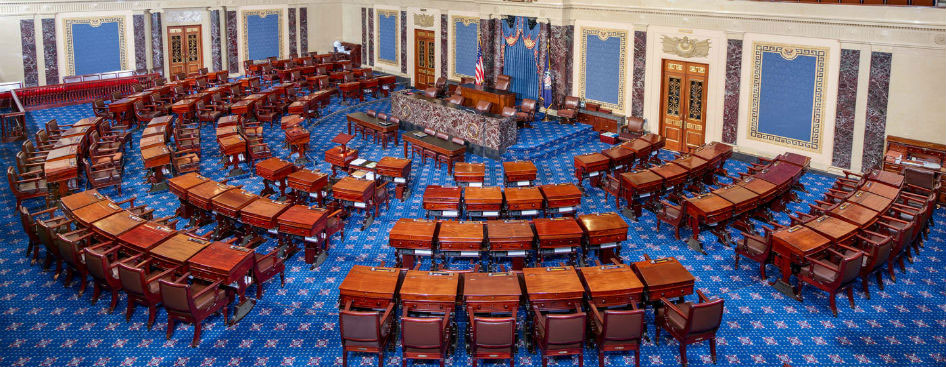
The Associated Press has called Democratic control of the United States Senate after a series of Republican defeats in the 2026 midterm elections. The result changes the balance of power for the final two years of President Donald Trump’s term.
Updated 4 November 2026: The Associated Press has called Democratic control of the Senate following Josh Turek’s victory in Iowa. The article has been updated to include Iowa and Kansas among the Republican-held seats gained by Democrats. Election-night calls are not official certification.
The result means the Democratic caucus, including independents who sit with the party, has secured at least the 51 seats needed to control the next Senate, according to election-night race calls. Republicans entered the election with a 53–47 majority, leaving Democrats needing a net gain of four seats to take control.
The change follows Democratic victories in several states that supported Donald Trump in the 2024 presidential election. The new majority will affect the Senate’s legislative agenda, committee oversight and consideration of the president’s nominations.
Which states helped Democrats take the Senate?
Among the most consequential Democratic gains were these Republican-held seats:
- North Carolina: former Democratic governor Roy Cooper defeated Republican Michael Whatley for the seat left open by Thom Tillis. Reuters reported the result.
- South Carolina: paediatrician Annie Andrews defeated Republican Darline Graham, delivering the state’s first Democratic Senate election victory since 1998. The Associated Press confirmed the race call.
- Ohio: former senator Sherrod Brown defeated Republican Jon Husted in a special election to complete the term formerly held by Vice-President JD Vance. AP reported Brown’s comeback.
- Texas: Democratic state legislator James Talarico defeated Republican Ken Paxton, ending a decades-long Democratic losing streak in statewide elections. Reuters reported his victory.
- Iowa: state representative Josh Turek defeated Republican Ashley Hinson for the open seat of retiring senator Joni Ernst. The Associated Press reported that Turek’s win delivered Democratic control of the Senate.
- Kansas: Methodist pastor Adam Hamilton was projected to defeat Republican incumbent Roger Marshall, ending a 94-year period without a Democratic Senate election victory in the state. Reuters reported the projected result.
Democrats also retained important seats, including Georgia, where Senator Jon Ossoff defeated Republican Mike Collins, and New Hampshire, where Chris Pappas won the seat vacated by Jeanne Shaheen. These holds mattered because gains elsewhere would not have delivered a majority if Democrats lost enough seats of their own.
The final composition of the chamber must reflect every race that has been called, including any remaining contests and any subsequent recounts. The Associated Press election reporting provides the wider national results and context.
What does Democratic control of the Senate change?
The majority party has a decisive role in organising the Senate and setting its business. Its members generally chair committees, while the majority leader works with committee leaders to decide which bills, nominations and other business are brought before senators.
A Democratic majority could therefore launch or expand investigations of the Trump administration, call officials to testify at committee hearings and scrutinise federal spending and government decisions. The precise powers and priorities of committees will depend on how the new Senate is organised.
The Senate also votes on senior executive branch and federal judicial nominations. A Democratic majority would have greater power to reject or delay nominations it opposes, although individual senators can break with their parties and the chamber’s rules still apply.
Could Democrats stop Donald Trump’s agenda?
Control of the Senate is significant, but it does not mean Democrats can govern alone or remove the president from office. Legislation generally requires approval in both the House of Representatives and the Senate before it goes to the president for signature.
President Trump would retain his constitutional veto. Overriding it normally requires a two-thirds vote in each chamber. Many Senate bills can also face a 60-vote threshold to end debate under the chamber’s filibuster rules, although exceptions exist.
If the House of Representatives is also controlled by Democrats, the party would have more scope to coordinate investigations and influence legislation. Even then, the White House would remain under Republican control, and disagreements could lead to negotiations, legislative deadlock or disputes over federal spending.
The Senate has the sole power to try federal impeachments, but removing a president requires a two-thirds vote to convict. A simple Democratic majority would not be sufficient.
Why did Democrats need 51 seats rather than 50?
The US vice-president serves as president of the Senate and may cast a deciding vote when the chamber is tied. Because Vice-President JD Vance is a Republican, a 50–50 division would not by itself give Democrats control of Senate votes.
The Democratic caucus consequently needed at least 51 seats, including the two independents who caucus with the party. Before the midterms, that group held 47 seats against 53 Republicans. The Senate’s official party figures document that starting position.
When will the new Senate take office?
The 120th Congress is due to begin at noon on 3 January 2027 under the constitutional timetable. The new Senate will then organise its leadership and committee positions. Any senator elected to a special vacancy may have a different swearing-in timetable.
Election-night winner calls are made before the full certification process has been completed. Final official vote totals are established through state election procedures, and any disputed counts must be handled under the relevant laws.
For the wider picture, see our guide to the 2026 US midterm elections, and our separate reports on North Carolina, South Carolina and Georgia.
Sources
- Associated Press: Democrats gain Senate seats in 2026 midterms
- Reuters: US midterm results and congressional control
- Reuters: Texas Senate result
- Associated Press: Ohio Senate result
- US Senate: majority and minority leaders
- US Senate: new Congress timetable
- Associated Press: how election winner calls are made
- Associated Press: Josh Turek wins Iowa as Democrats take Senate control
- Reuters: Adam Hamilton wins Kansas seat