Tens of thousands of people joined youth-led demonstrations across Germany on Saturday, 31 October, with most events passing peacefully before serious violence broke out in several cities.
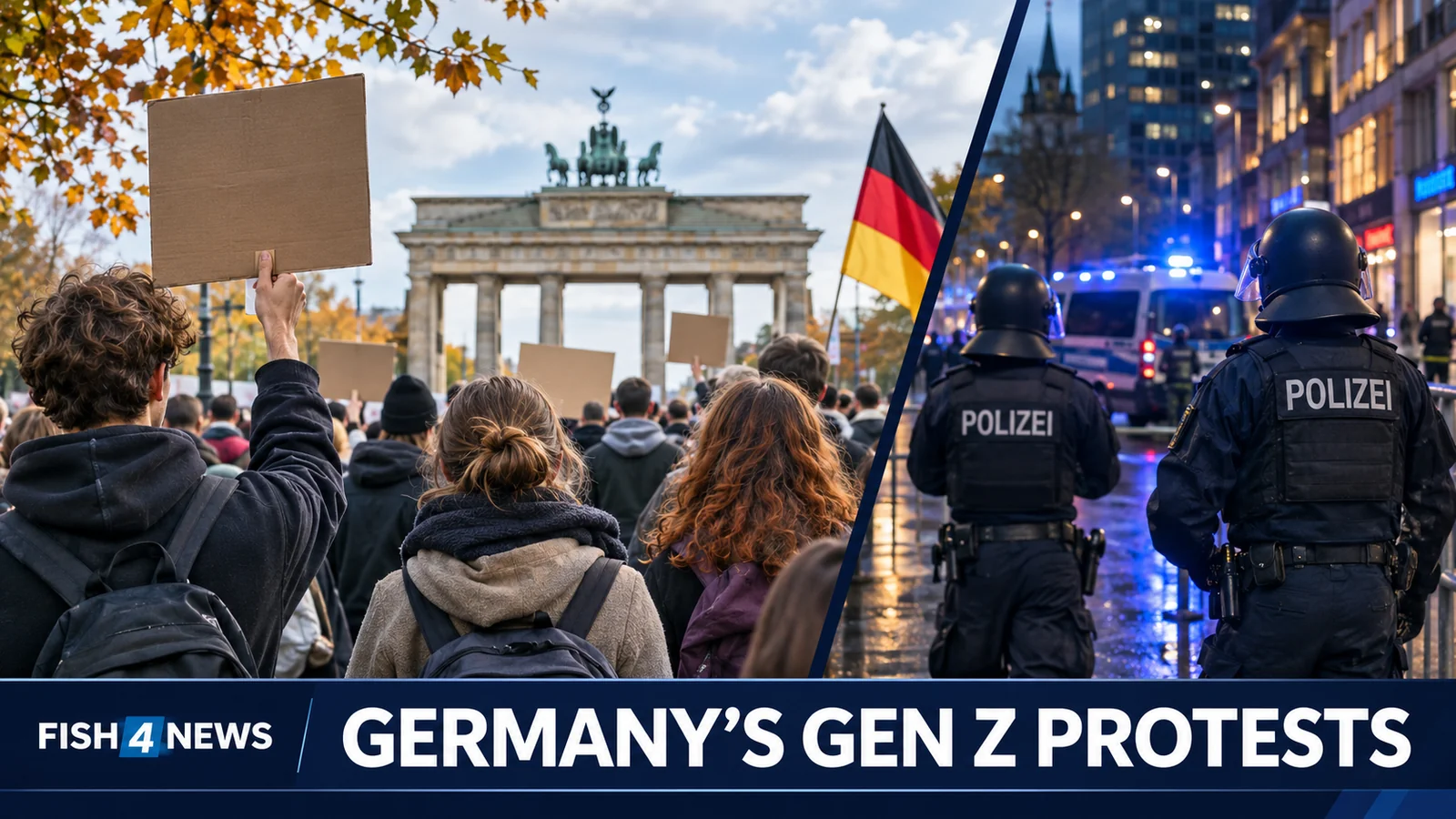
The protests, called by the initiative Gen Z regelt (“Gen Z sorts it out”), demanded better education, more affordable living costs, action on climate change and opposition to compulsory military service. Police reported major disorder in Frankfurt, while further clashes were recorded in Hamburg, Cologne and Berlin. The disorder did not represent the behaviour of the majority of protesters. ARD’s national assessment said demonstrations had been planned in more than 30 cities.
Frankfurt: More than 100 police officers injured
Hesse’s Interior Minister Roman Poseck said on Sunday, 1 November, that more than 100 police officers had been injured in Frankfurt, including one officer who lost teeth after being hit in the face by a stone. He said police had arrested 54 people aged between 13 and 29. The figures were reported by the German news agency dpa and Reuters.
Poseck said 17 shops had been damaged and five looted, while the operation involved up to 1,300 officers. The police recorded 87 criminal complaints, 366 identity checks and 1,225 orders requiring people to leave particular locations, according to the dpa account of the briefing.
The minister estimated that 1,000 to 1,500 violent troublemakers had been involved. He attributed much of the violence to groups he described as from migrant backgrounds and to left-wing extremists. Those are official assessments under investigation, not findings establishing the identity or responsibility of everyone involved. Poseck said the people arrested were predominantly German citizens and that there was no evidence of offenders travelling from abroad.
Earlier police reporting had referred to more than 30 provisional arrests and a smaller number of suspected extremist offenders. The later totals are revisions from the Sunday briefing, not an additional 54 arrests. Police are examining video evidence and have sought help from witnesses.
Hamburg: Barricades, fireworks and 120 temporary arrests
Hamburg police said approximately 6,700 people joined a demonstration against compulsory military service. The march was largely peaceful initially, but officers reported stones and fireworks being thrown, an improvised fire and later attempts to construct or ignite barricades. The organiser ended the march at 4.56pm.
Police said groups continued gathering near the main railway station. Around 10pm officers temporarily arrested 120 people after checking a group near Steintorweg and Bremer Reihe. The police statement did not establish that all those arrested had participated in the earlier march or that they had been charged with offences. Hamburg had a separate policing operation for Halloween activities on the same evening. Read Hamburg Police’s statement.
Berlin: Two different demonstrations
Police described the daytime Gen Z regelt gathering at the Brandenburg Gate, attended by approximately 5,000 people by the police estimate, as almost entirely peaceful. Organisers gave a higher turnout estimate.
A separate evening march called Gen Z hat genug! began around Rosenthaler Platz and grew to approximately 3,500 people. Police reported bottles, stones and fireworks being thrown, 27 officers slightly injured and up to 56 arrests. The afternoon organisers had distanced themselves from that second demonstration. The two events should not be merged into a single account of violence. See rbb’s contemporaneous account.
Cologne and Stuttgart
In Cologne, police reported attacks on officers, damage to buildings and vehicles and the use of fireworks after the demonstration and during Halloween-related incidents. In a statement published at 6.19am on Sunday, police said no looting had been confirmed as of 6am and asked witnesses to submit photographs or video. A further operational summary was expected. Read Cologne Police’s evidence appeal.
In Stuttgart, around 6,000 people attended the protest. Police reported offences involving pyrotechnics and breaches of demonstration conditions but said the feared large-scale disturbances had not occurred. Other cities, including Freiburg, reported largely peaceful demonstrations. SWR’s Stuttgart report provides the local assessment.
Why were young people protesting?
The movement says the pressures facing younger generations are being overlooked. Its demands cover funding for schools and health services, reducing living costs, a fairer distribution of economic burdens, opposition to military conscription, protection of civil liberties and stronger climate policies.
The organisers estimated a nationwide turnout of around 120,000, a figure that has not been independently audited. ARD reported that more than 180,000 people had expressed interest in attending beforehand. The movement described the national action as a first step and said it intended to support further demonstrations on 20 November. Read the organisers’ response.
What police and politicians have said
Federal Interior Minister Alexander Dobrindt condemned the violence and praised the police response. Hesse’s interior minister promised consequences for offenders and discussed whether future demonstrations of this kind could face restrictions. Such proposals do not amount to a confirmed ban.
The organisers of Gen Z regelt publicly called for peaceful demonstrations and rejected violence. Police inquiries will need to establish which offenders took part in which events, rather than treating everyone present at a protest as responsible for the subsequent disorder.
What we know and what remains unclear
- Established: tens of thousands attended demonstrations nationally, and many protests were peaceful.
- Established: serious violence and attacks on officers occurred in Frankfurt; the latest official briefing reported more than 100 officers injured and 54 arrests.
- Established: Berlin’s violent evening march was a separate event from its largely peaceful afternoon gathering.
- Still developing: final arrest, injury and damage totals for several cities, especially Cologne, may change as police investigations continue.
- Not established: the individual responsibility and political affiliation of every person involved in disorder, or whether separate disturbances in different cities were coordinated.
Watch: peaceful protests and later disorder
Berlin, 31 October: The main demonstration. Euronews filmed young protesters carrying banners and chanting outside the Brandenburg Gate. This footage shows the daytime rally, not Berlin’s separate and more confrontational evening march. Watch the Berlin protest video on Euronews.
Frankfurt, 31 October to 1 November: Disorder following the protests. Euronews shows the aftermath of the violence, including damaged shopfronts and police operations. The clip concerns Frankfurt and must not be mistaken for the peaceful demonstrations elsewhere. Watch the Frankfurt footage on Euronews.
Both videos are hosted by their original broadcaster and open on its website. They are not embedded players within this article.
Video and original sources
NDR Hamburg Journal video, 31 October 2026 shows scenes around the end of the Hamburg demonstration. It should not be presented as footage from Frankfurt or Cologne.
- Hamburg Police: 1 November overnight operational report
- Cologne Police: 1 November evidence appeal
- Hesse Interior Ministry: 29 October police preparation briefing
- Reuters: Frankfurt casualty and arrest figures, 1 November
- ARD: organiser demands, attendance and response
- rbb: separate Berlin afternoon and evening protests
Reporting updated with figures available on Sunday, 1 November 2026. Arrests and police assessments do not establish criminal guilt. Images © Fish 4 News.