A proposed £550 million electricity line linking the Humber with the East Midlands has moved into formal planning scrutiny, but it has not yet been given permission to be built.
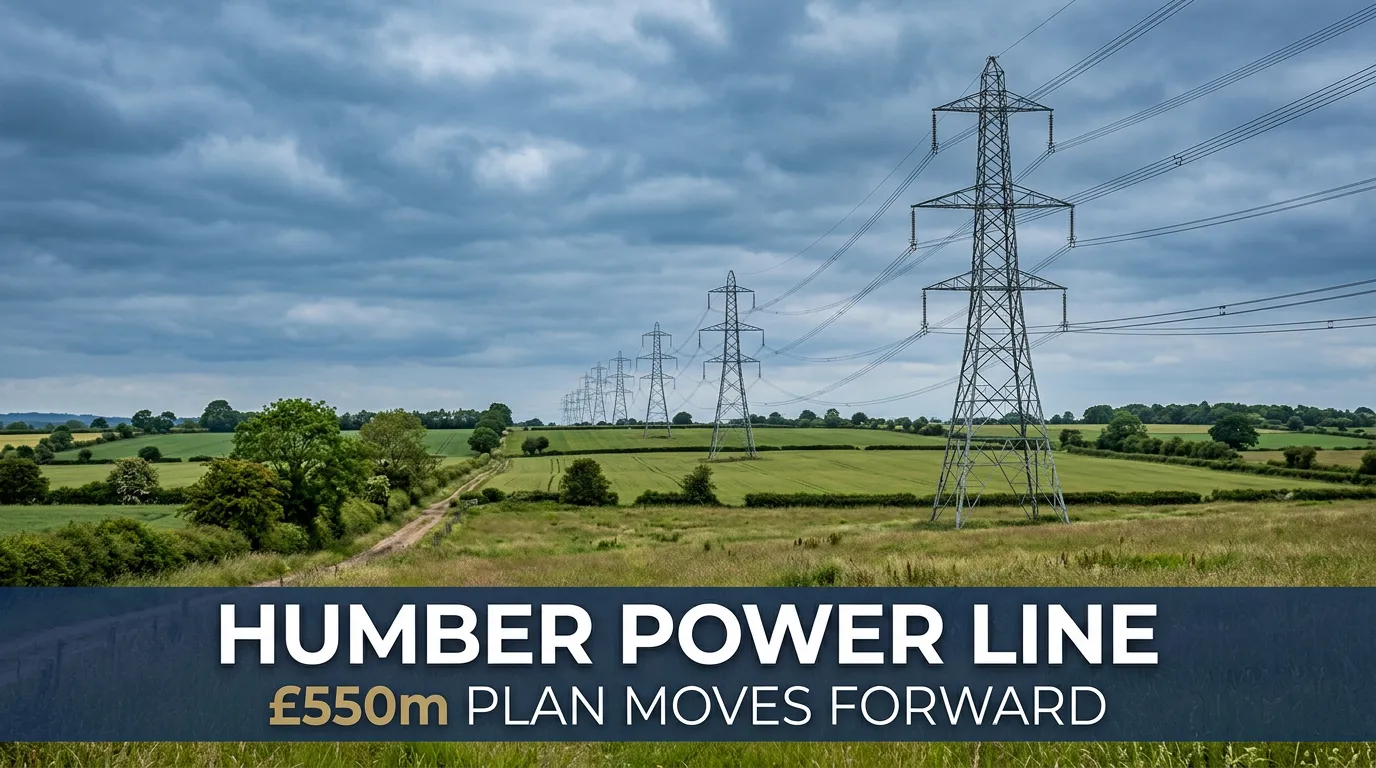
The Planning Inspectorate accepted National Grid’s Development Consent Order (DCO) application for the North Humber to High Marnham project on 12 November 2026. Acceptance confirms the application can proceed to the next stage; it is not a decision to approve the 90-kilometre overhead power line.
What is being proposed?
The scheme would add about 90km of new 400-kilovolt overhead electricity line between the Birkhill Wood substation, north of Hull in the East Riding of Yorkshire, and High Marnham in Nottinghamshire. It would cross parts of East Yorkshire, North Lincolnshire and Nottinghamshire.
The proposals also include changes to existing high-voltage lines, together with temporary construction access, work compounds, highway works and environmental measures. The two substations are being handled through separate local planning applications: Birkhill Wood received conditional permission in February 2026 and High Marnham in June.
The widely reported £550m price tag is based on an earlier £553m strategic assessment, rather than a newly confirmed final construction cost. Construction Enquirer reports that the earlier estimate comprised £338m for overhead lines and £215m for associated substation works.
Why does National Grid want the new line?
National Grid says more transmission capacity is needed to carry electricity from the Humber region towards the Midlands, particularly as offshore wind generation expands along Britain’s east coast. The scheme forms part of its wider Great Grid Upgrade.
The company says it will help address constraints in the existing network and provide more capacity for homes, businesses and public services. Those benefits remain projections dependent on delivery of the infrastructure.
What about the impact on communities?
The proposals have faced local concerns over their effects on countryside, villages and farming. In January 2025, North Lincolnshire Council called for extensive face-to-face consultation along the proposed route. Council leader Rob Waltham warned at the time that the new lines could change the character of valued landscapes and affect farms.
Those are the council’s expressed concerns, not findings that the impacts have already been established by the planning examination. National Grid says consultation, environmental assessment and feedback have informed the proposals.
If development consent is ultimately granted, National Grid says an approximately £18m community fund would be established to support local projects. The fund is conditional on the scheme going ahead.
Does this mean the pylons have been approved?
No. The project is now in the pre-examination stage. An independent Examining Authority will be appointed and residents, landowners and other stakeholders will be able to register as Interested Parties and submit representations when the formal registration period opens.
Following examination, the Planning Inspectorate will make a recommendation to the Secretary of State for Energy Security and Net Zero, who will decide whether to grant development consent. National Grid has not yet announced the registration deadline on its project update page.
According to Construction Enquirer, the current programme envisages starting transmission-line construction in 2028 and bringing the connection into operation in 2031, subject to consent. These remain projected dates, not guarantees.
What happens next?
The next points to watch are the opening of Interested Party registration, the examination timetable and any changes to the proposed route or environmental measures. Residents can follow the National Grid project updates and review the Planning Inspectorate’s project register and application documents (EN020034).
Sources
- National Grid: application accepted, 12 November 2026
- National Grid: route, works and planning process
- North Lincolnshire Council: consultation concerns, January 2025
- Construction Enquirer: costs and projected timetable, 13 November 2026
Follow this story: North Humber to High Marnham updates.