British author M John Harrison has won the 2026 Booker Prize for his novel The End of Everything, becoming the oldest winner in the award’s history at the age of 81.
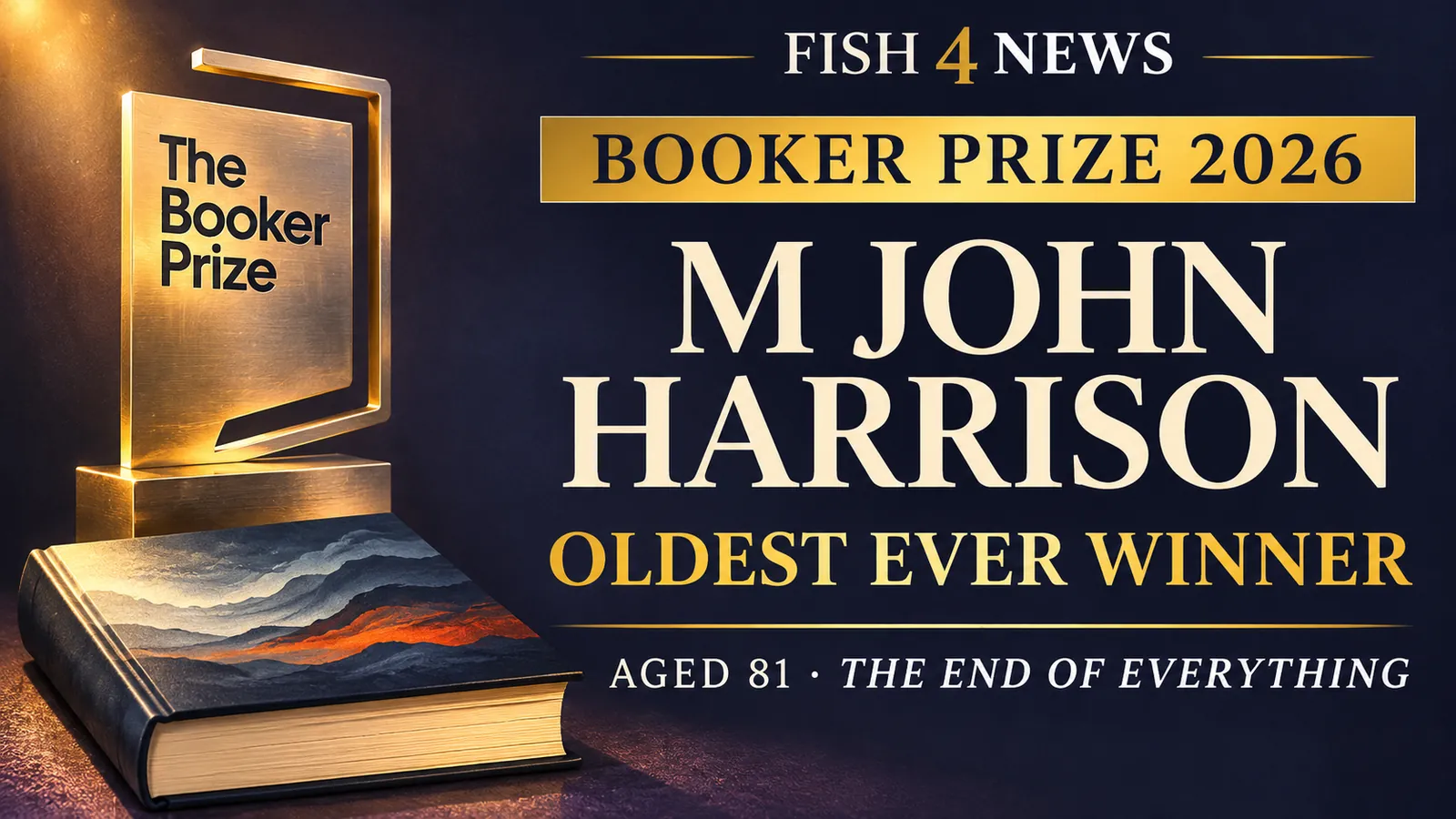
The science-fiction writer received the £50,000 prize at a ceremony at Old Billingsgate in London on Monday, 9 November. His victory overtakes the previous age record held by Margaret Atwood, who was 79 when she shared the 2019 award for The Testaments.
It is an unusual moment of recognition for a writer who has spent more than six decades challenging the boundary between science fiction and literary fiction. Harrison was nominated for the Booker Prize for the first time this year, although he previously served on its judging panel in 2022.
Why did The End of Everything win?
The novel takes readers to the south coast of England a few decades into the future, after a catastrophe nobody fully understands. Phillip Tennent and his elderly aunt Marnie are trying to get by in a society where familiar rules have broken down and mysterious beings known as the iGhetti have appeared.
Rather than offering an explanation for every extraordinary event, Harrison makes that uncertainty part of the story. Everyday routines continue alongside the unfamiliar and threatening, creating a world that is both unsettling and darkly funny.
The judging panel, chaired by historian and broadcaster Mary Beard, reached a unanimous decision after discussing all six shortlisted novels. Beard described Harrison’s novel as a book that “turns you upside down” while offering an unexpected sense of optimism.
In its announcement about the winning novel, the Booker Prize said the imagined disaster offers a way of looking at the politics and anxieties of the present.
A milestone for science fiction
Harrison began publishing fiction in the 1960s and worked on the influential science-fiction magazine New Worlds. His books include Climbers, Nova Swing and The Sunken Land Begins to Rise Again, which won the Goldsmiths Prize in 2020.
Gaby Wood, chief executive of the Booker Prize Foundation, described his achievement as a historic victory for a writer rooted in the established science-fiction world. The recognition does not mean science-fiction themes have never appeared in previous Booker-winning books, but Harrison’s background in the genre makes his win distinctive.
Harrison’s winning novel is published by Serpent’s Tail, an imprint of Profile Books. It is also the publisher’s first Booker Prize win.
Who else was shortlisted?
The six-book shortlist included two previous Booker winners, Marlon James with The Disappearers and Douglas Stuart with John of John. The other finalists were Elizabeth Strout’s The Things We Never Say, Luke Kennard’s Black Bag and Rebecca Perry’s May We Feed the King.
The judges considered 163 submitted books before selecting the longlist and shortlist. The five other shortlisted authors receive £2,500 each.