Mercedes-Benz has suspended further investment at its German manufacturing sites and is examining possible factory closures after talks with workers’ representatives over labour costs stalled. No factory closure or related redundancy figure has been confirmed.
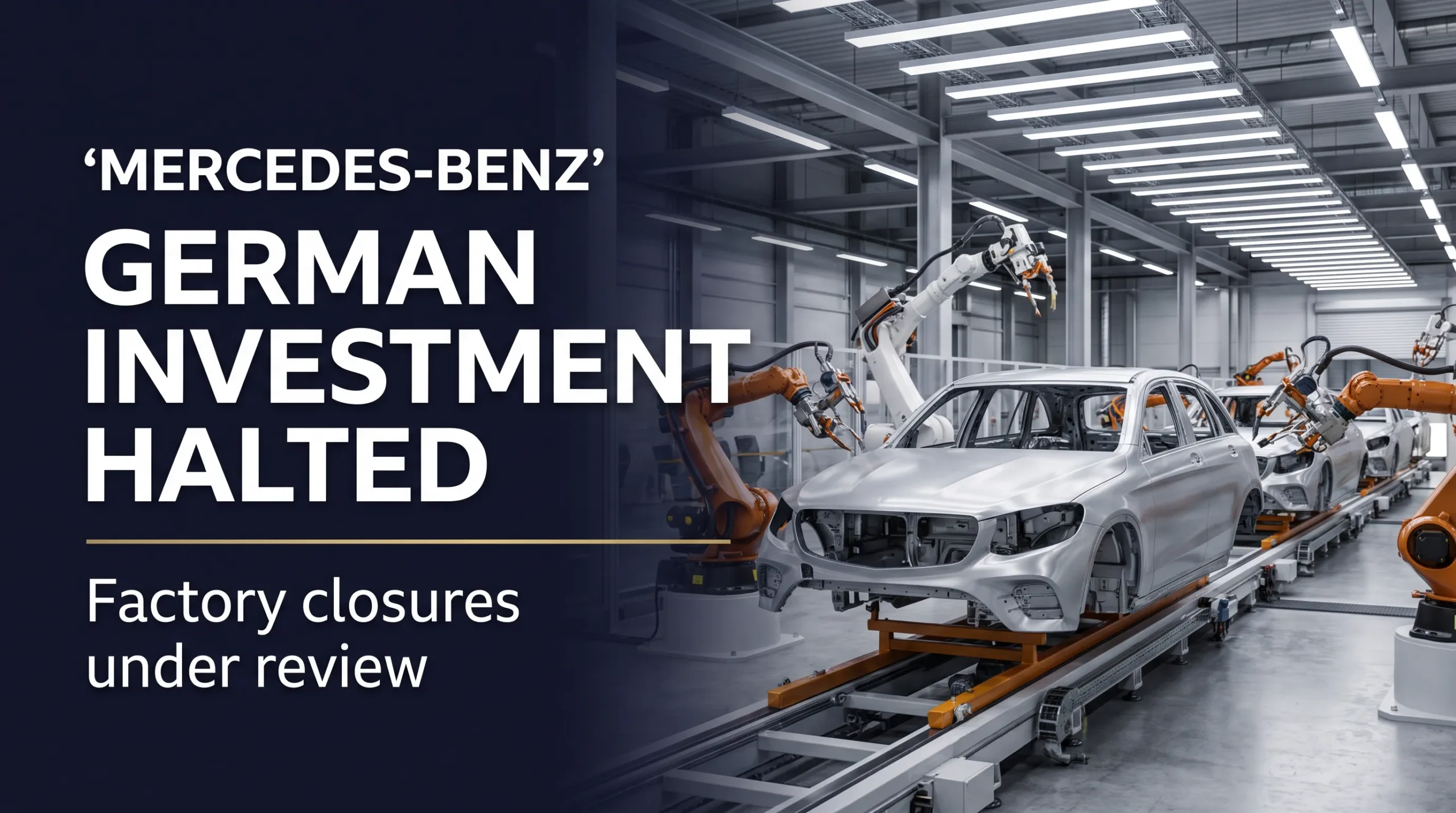
The German carmaker’s production chief Michael Schiebe announced the investment suspension in an internal interview reported by Reuters on Thursday 12 November. The move follows months of negotiations with the company’s works council and the IG Metall trade union.
Mercedes says higher production costs, weaker demand, tariffs and competition are making its German operations less competitive. Union representatives have rejected the prospect of factory closures and called for guarantees about the future of German sites.
What has Mercedes-Benz actually decided?
The board has suspended further investment in German locations while it examines which plants it can continue to operate economically. Management says it wants to avoid closures, but the option is now being examined in greater detail.
That is a serious escalation, not a confirmation that a factory will shut. There is no published final list of closure candidates, no confirmed decision to transfer a particular model overseas and no timetable for redundancies arising from this announcement.
In September, Schiebe had raised the possibility of closing one vehicle assembly plant and one powertrain plant if the company could not secure sufficient cost reductions. A powertrain facility makes components used to propel vehicles, such as engines, motors or related systems.
Which Mercedes-Benz factories could close?
Mercedes has not named any site that it has decided to close. Its major German passenger-car assembly factories include:
- Sindelfingen, which has around 30,500 employees across production and other activities including research and development.
- Bremen, with around 10,500 employees.
- Rastatt, with around 7,000 employees.
Those are published site workforce figures, not confirmed numbers of jobs at risk. German broadcaster SWR has reported anxiety among workers at Rastatt, but the company has made no closure announcement for that plant.
At the Berlin-Marienfelde powertrain site, approximately 1,800 people work. The local IG Metall branch says employees are worried about possible closures and is demanding an assurance about the factory’s future. The union’s concerns do not establish that Mercedes has selected the site for closure.
One important clarification concerns Ludwigsfelde, which produces vans. A plant spokesperson told regional broadcaster rbb on 13 November that Ludwigsfelde was not covered by the closure considerations or investment suspension under discussion. Earlier reports had included it among sites that might be affected.
How many Mercedes-Benz jobs are at risk?
There is no reliable company-wide redundancy figure linked to these possible German factory closures. Even where an individual plant’s workforce is known, it would be misleading to treat every person employed there as facing a confirmed job loss.
The potential effects extend beyond direct employment. A factory closure could affect suppliers, subcontractors, logistics firms and local businesses, but those wider consequences cannot be quantified until the company makes a specific decision.
Why is Mercedes demanding lower costs?
At the centre of the dispute is the cost of manufacturing vehicles in Germany. Management wants greater productivity and has proposed longer working hours without a matching increase in pay, with reports describing a move from 35 hours towards 40 hours a week. Holiday payments, Christmas bonuses and profit-sharing have also been discussed as potential areas for savings.
Germany’s collectively agreed 35-hour working week is an important issue for IG Metall. The union argues that workers should not be expected to absorb the cost of Mercedes’ wider competitive problems.
Mercedes is also facing difficult trading conditions, particularly in China, as well as price competition and tariffs. Its management argues that the cost gap between its German operations and facilities elsewhere has become too large.
What do Mercedes-Benz’s latest financial results show?
The company remains profitable, but its passenger-car business is under considerable pressure. According to Mercedes-Benz’s results for the third quarter of 2026, group revenue fell 4.5% year on year to €30.7 billion.
Adjusted earnings before interest and tax at Mercedes-Benz Cars dropped 50.8% to €560 million, while its adjusted return on sales declined from 4.8% to 2.5%. Group net profit, however, rose 27.6% to €1.52 billion, supported by other parts of the business and differences in adjustments between the two periods.
That distinction matters. Mercedes is not announcing closures because it has ceased to make money. Management is trying to address a substantial deterioration in the profitability of its carmaking operations, while the union disputes the proposed remedies.
What has IG Metall said?
In a joint statement issued on 13 November, general works council chairman Ergun Lümali and IG Metall regional leader Barbara Resch demanded credible plans and meaningful negotiations to safeguard German sites.
The union opposes closures and says the company must offer clear commitments on future products and investment. Berlin union representatives likewise argue that freezing investment does not provide a sustainable plan for employees or the business.
Neither side has announced a settlement. The next major development will be whether the company and employee representatives agree a cost-reduction package or Mercedes formally identifies plants for closure.
What does this mean for Germany’s car industry and the UK?
The dispute comes amid broader pressure on European automotive manufacturing. German producers and suppliers face changing demand, competition from Chinese manufacturers and the expense of updating factories for electric and hybrid technology.
Reuters has also reported restructuring at Volkswagen and further job reductions at automotive supplier Schaeffler. The Mercedes announcement therefore adds to concerns about where future European vehicle production will take place.
There has been no announcement of factory closures or redundancies in Mercedes-Benz’s UK operations arising from this decision. British dealers, parts suppliers and customers could be affected indirectly if future sourcing and production plans change, but a direct UK employment impact has not been established.
What happens next?
There are three points to watch: whether negotiations produce a deal on working hours and pay, whether Mercedes resumes German investment and whether management names any factory for closure or transfers particular vehicle programmes.
Until a formal decision is announced, reports naming individual factories should be treated as possible scenarios, not completed closures.
Sources and further reading
- Reuters: Mercedes-Benz halts German investments as plant closures loom, 12 November 2026
- IG Metall Baden-Württemberg: works council and union statement, 13 November 2026
- IG Metall Berlin: response concerning Berlin-Marienfelde, 13 November 2026
- rbb24: Berlin and Ludwigsfelde factory clarification, 13 November 2026
- Mercedes-Benz Group: third-quarter 2026 financial results, 28 October 2026
Follow this story: Mercedes-Benz factory closures and investment developments.