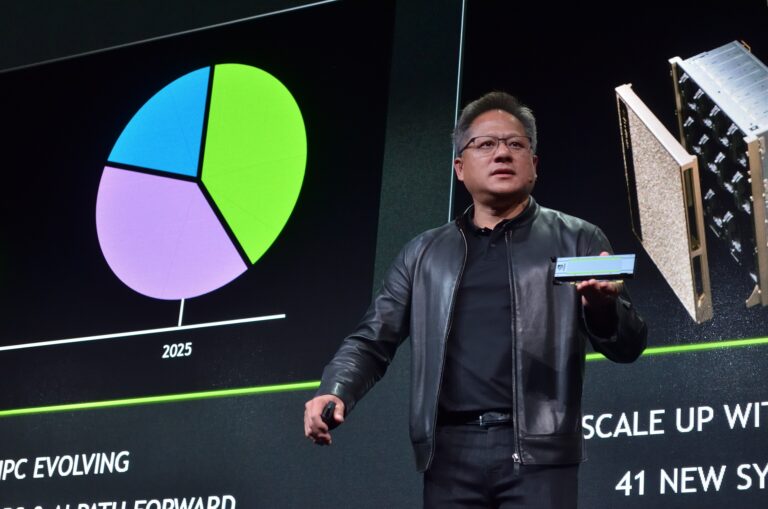
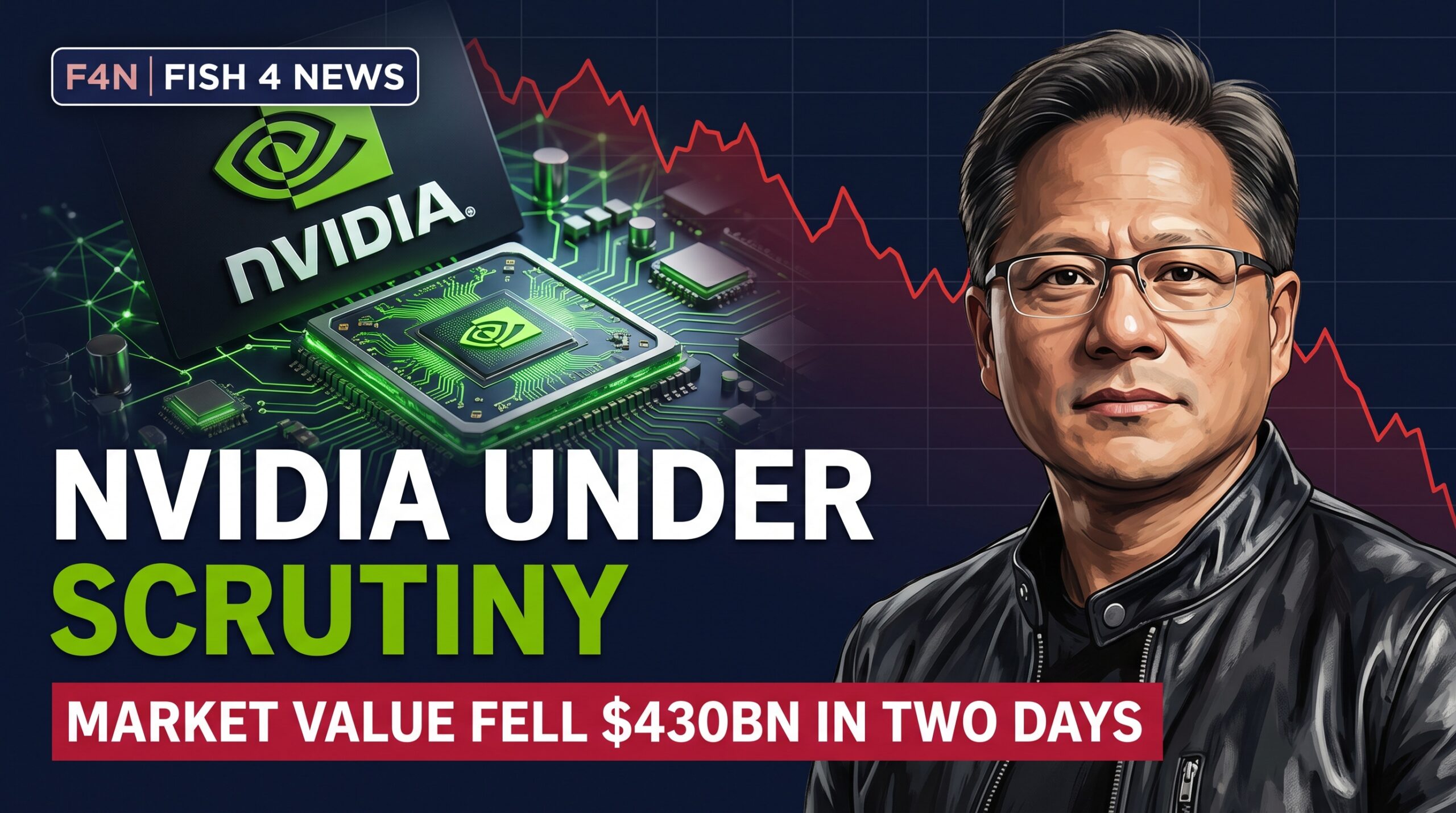
Nvidia has lost approximately $430 billion (£322 billion) in market value over two trading sessions as its board investigates reports that chief executive Jensen Huang may have been targeted by a foreign intelligence operation.
The US technology company’s shares fell sharply on Monday 9 and Tuesday 10 November 2026 after allegations emerged concerning Huang’s personal relationship with Alice Huang, a former executive of Singapore-based cloud-computing company Megaspeed. US officials reportedly suspect the businesswoman of acting as an intelligence asset for China. That allegation has not been proven in court, and no finding that Nvidia secrets were compromised has been announced.
What Nvidia has confirmed
In a statement on 8 November, Nvidia’s board said an independent committee, supported by outside legal counsel, would investigate reports that Huang had been the target of a foreign intelligence effort. Its statement said the board had no reason to believe that national security or Nvidia trade secrets had been compromised, and expressed confidence in Huang and his management team.
Huang has separately acknowledged being unfaithful to his wife in a message to employees. That admission is not an admission of espionage, involvement in illegal chip exports or knowledge of any alleged intelligence connection.
What the share-price fall means
Reuters reported that the sell-off wiped about $430 billion from Nvidia’s market capitalisation across two sessions. Shares declined approximately 4.3% on Monday and a further 5.5% on Tuesday, closing at $168.89 on 10 November. These are changes in the company’s stock-market valuation, not $430 billion paid out by Nvidia or a realised trading loss for every shareholder.
An accompanying Sky News chart showed Nvidia’s share price down roughly 30% from an earlier peak. That longer-term comparison must not be confused with the two-day decline, and the earlier movement cannot all be attributed to the latest allegations. Shares were recovering during trading on Wednesday 11 November, meaning the $430 billion figure is a historical two-session snapshot rather than a continuously current total.
The allegations concerning Alice Huang and chip shipments
The woman named in reporting, Alice Huang, is not related to Jensen Huang. Reuters reported that US authorities were said to regard her as a Chinese intelligence asset. China has rejected the espionage accusations as groundless. No publicly established finding shows that Jensen Huang knowingly supplied information to Chinese intelligence.
A separate report by The Information, summarised by Reuters on 10 November, alleged that Alice Huang helped facilitate at least $7.5 billion worth of Nvidia chip shipments to China through a network of companies. It cited people familiar with the arrangements and referred to approximately 240,000 chips, including H100, H200 and A100 models. These are claims from that investigation, not established findings that the shipments were unlawful or that Jensen Huang participated in wrongdoing.
US restrictions on exports of advanced AI chips to China are an important element of the broader dispute. The allegations raise questions about supply chains, corporate compliance and whether Nvidia’s board had adequate oversight of potential conflicts of interest.
FBI inquiry, political scrutiny and shareholder lawsuit
President Donald Trump said on 9 November that the FBI was looking into the matter. According to Reuters, Trump also said Huang told him he had not known the woman was allegedly connected to Chinese intelligence. The President’s account should not be confused with a published FBI conclusion.
Nvidia and Huang have also been named in a proposed shareholder class action filed in California. The complaint alleges investors were misled because the company did not disclose the relationship and its possible national security implications. The lawsuit is an allegation brought by investors, not a judicial finding of securities fraud. Reuters reported on the filing on 9 November.
According to Reuters’ legal analysis on 11 November, potential liability would depend on evidence about disclosures, board oversight and whether any misconduct occurred. The mere existence of an affair or of an investigation does not establish criminal liability.
What remains unknown
The independent inquiry has not established publicly whether a foreign intelligence operation took place, whether confidential technology or company information was obtained, whether any export-control rules were broken or whether Nvidia and its leadership face enforceable legal liability. Reports that US officials suspect Alice Huang are not proof of espionage.
Sky News report
Sky News examined the sharp decline in Nvidia’s share price and market capitalisation in a report published on 11 November.
Sources
- Nvidia board statement, 8 November
- Nvidia: Jensen Huang’s statement to employees, 8 November
- Nvidia: statement by independent directors, 10 November
- Reuters: market losses and chip-export controversy, 10 November
- Reuters: allegations relating to $7.5 billion in chip shipments
- Reuters: shareholder lawsuit, 9 November
- Reuters: legal questions surrounding the allegations, 11 November
- Associated Press: board inquiry and succession concerns
Related Fish 4 News coverage: Initial report on Nvidia’s investigation and analysis of wider AI investment and pension-fund exposure.
Follow this story: Nvidia and Jensen Huang investigation updates.