A proposed £2bn road tunnel beneath the Peak District linking Sheffield and Manchester has secured £500,000 to investigate whether the ambitious scheme could be built. The money is for feasibility work, not permission to begin construction.
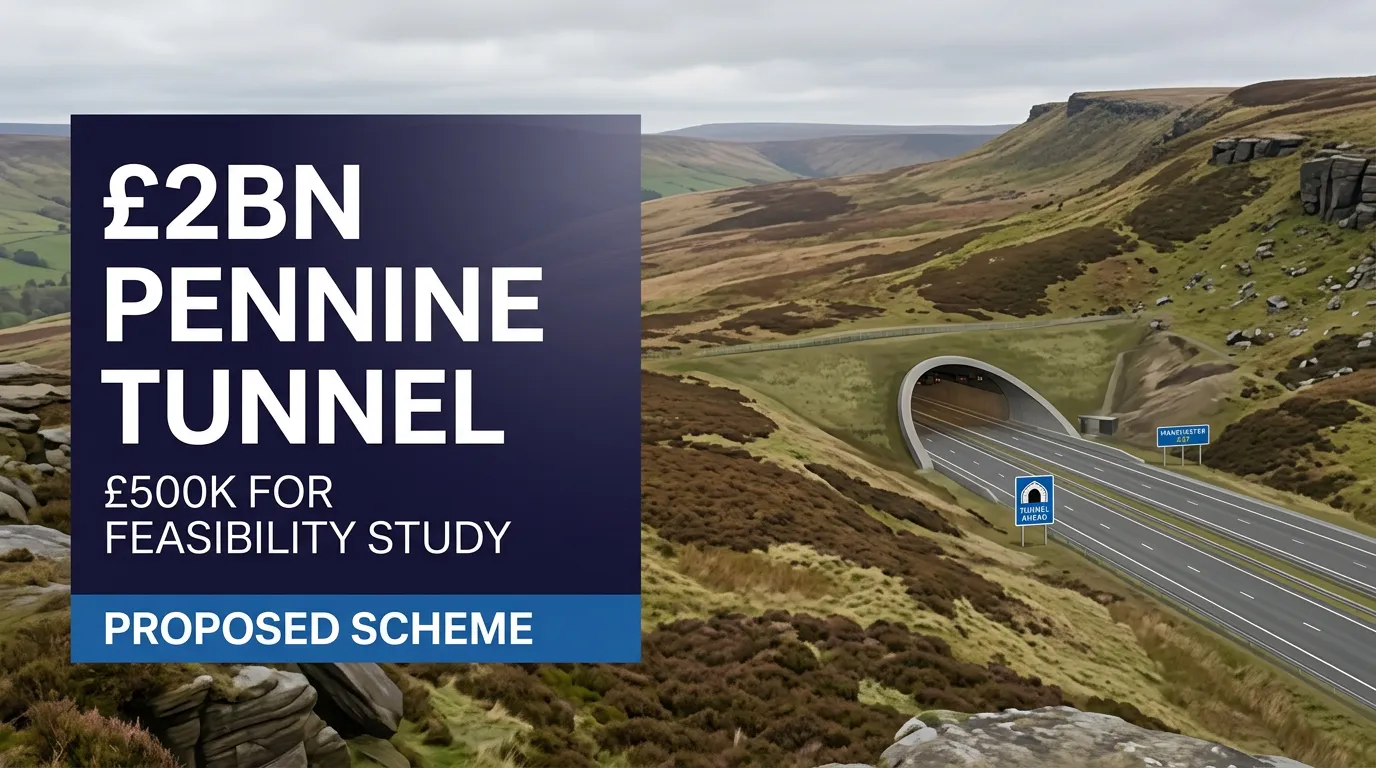
The UK Dynamism Fund confirmed its backing for Trans-Pennine Connect on 10 November 2026, according to specialist publication Tunnelling Journal. Project promoters Future Works Infrastructure say the studies will examine technical, environmental and financial questions.
What is being proposed?
The plan envisages a roughly 14-mile (22km) dual-carriageway tunnel beneath the Pennines, with indicative entrances near Langsett in South Yorkshire and Tintwistle in Derbyshire. Traffic would then continue towards Sheffield and Manchester on existing or improved roads. The precise route and tunnel portals have not been finalised.
Future Works says the tunnel could cut journeys between the cities by up to 30 minutes. It also wants to reopen the former Woodhead railway crossing and restore some of the moorland currently occupied by the A628 road. These are ambitions set out by the promoters, rather than agreed construction commitments.
Why do backers think it could cost £2bn?
Earlier government work put the potential cost of a trans-Pennine tunnel at between £7.8bn and £11.6bn, in 2014 prices including project risk. Future Works argues that a different construction approach, based on Scandinavian drill-and-blast tunnelling methods, could bring the cost below £2bn.
That lower figure has not yet been established by an independent, completed feasibility study. The proposed approach still needs to demonstrate that it is suitable for the Pennines’ geology, safety requirements, environmental constraints and the scale of the scheme.
Who would pay for the tunnel?
The promoters have described a model using toll revenues and investment from private investors, pension funds or local authorities instead of relying entirely on government construction funding. No final financing package or toll charge has been announced.
The £500,000 award is a first step towards assessing the idea. It does not cover construction, which would require financing on an entirely different scale.
What about the Peak District?
Future Works argues that putting the road underground could reduce surface traffic and allow damaged moorland to be restored. But previous official assessments reached a more cautious conclusion.
National Highways says earlier tunnel options had a strong strategic case but were too expensive, and could still cause significant environmental harm to the Peak District National Park. Those findings relate to earlier proposals, not a completed assessment of the new design, but they illustrate the questions the current promoters will have to answer.
What happens next?
The feasibility studies must test the proposed design, costs, environmental effects and commercial case. Any eventual project would also need further decisions, consultation, relevant consents and a viable funding plan. There is no approved construction timetable.
For now, the news is that a major tunnel proposal has secured funding to be studied, not that the tunnel itself has been given the go-ahead.
Watch: BBC Yorkshire explains the proposed tunnel
Sources
- Tunnelling Journal, 11 November 2026: funding announcement
- Trans-Pennine Connect: official project proposal and indicative route
- National Highways: Southern Trans-Pennine improvements and earlier tunnel assessment
- Department for Transport: Trans-Pennine tunnel strategic study, 2016
- BBC Yorkshire: Inside the £2bn plan to build a tunnel between Sheffield and Manchester