
Stacy Keach, the American actor celebrated for his Shakespearean performances and his portrayal of television detective Mike Hammer, has died aged 85.
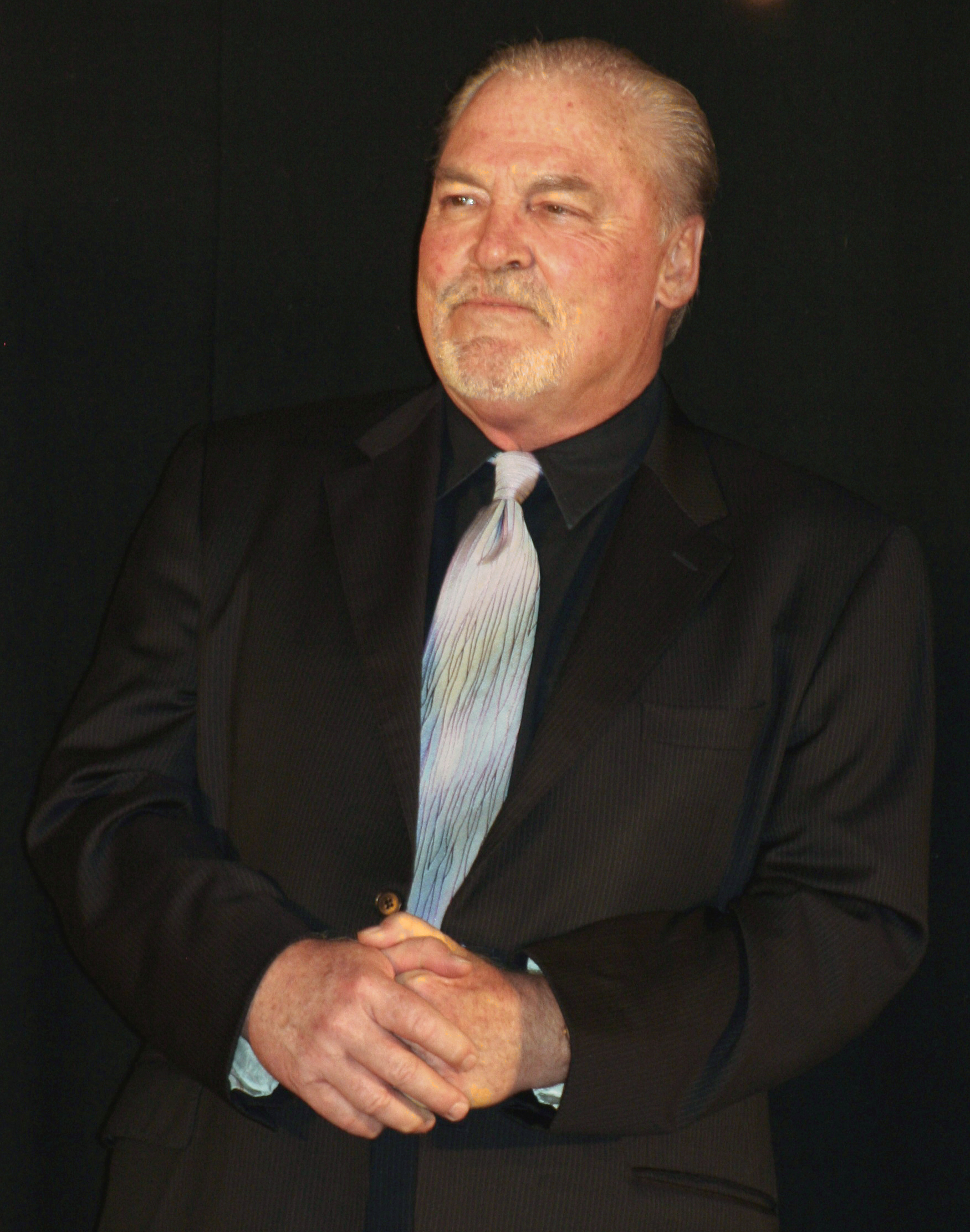
Keach died at his home in Magdalenka, Poland, on Tuesday 10 November 2026. His wife, Malgosia Tomassi Keach, said he had endured a long battle with a serious heart condition and heart failure.
For television audiences, he was the gravel-voiced, hard-boiled detective in a fedora. For theatre audiences, he was a performer capable of carrying some of Shakespeare’s most demanding roles. Neither version quite captures the breadth of a career that stretched across stage, film and television for more than six decades.
A life built around the theatre
Walter Stacy Keach Jr was born on 2 June 1941 in Savannah, Georgia, into a family of performers. He studied English and dramatic art at the University of California, Berkeley, continued his training at Yale and went to the London Academy of Music and Dramatic Art as a Fulbright scholar.
Classical theatre was not a detour on his way to screen fame. It remained central to his professional life. He played Hamlet, Henry V, Richard III, Macbeth, King Lear and Falstaff, embracing characters who demanded entirely different kinds of authority, vulnerability and physical presence.
In 1970 he received a Tony Award nomination for his portrayal of Buffalo Bill in Arthur Kopit’s Indians. He later played Richard Nixon in Frost/Nixon, returned repeatedly to Shakespeare and became a founding member of LA Theatre Works. In 2015, he was inducted into the American Theatre Hall of Fame.
He was also unusually frank about the choices he made. In a 2012 interview recalled by the Associated Press, Keach acknowledged that pursuing such a varied range of roles may have cost him opportunities. But he said his chance to play Shakespeare’s great characters was not something he would trade away.
The role that made him a household name
Keach’s best-known screen character was Mike Hammer, the private investigator created by crime writer Mickey Spillane. He first took on the part for television in the early 1980s and returned to it through subsequent films and series.
Hammer could be abrasive, suspicious and quick with his fists, but Keach gave him more than the familiar trappings of a television tough guy. Beneath the detective’s cynicism was a stubborn sense of right and wrong, a quality that helped make his interpretation distinctive.
The role brought Keach a wider audience than most theatre actors ever reach. Yet he resisted becoming confined to it, moving between mainstream entertainment and work that required an altogether different register.
From John Huston to Hemingway
His film career began with The Heart Is a Lonely Hunter in 1968. He worked with director John Huston on Fat City (1972) and The Life and Times of Judge Roy Bean, and appeared alongside his brother James Keach in the western The Long Riders (1980).
Later credits ranged from American History X (1998) and The Bourne Legacy (2012) to Alexander Payne’s Nebraska (2013). He continued working in later life, appearing in Jay Kelly in 2025. Television audiences also knew him from Titus, Prison Break and Blue Bloods, while his unmistakable voice made him a familiar narrator.
One of his most acclaimed performances came in the 1988 television miniseries Hemingway. His portrayal of the novelist earned him a Golden Globe in 1989 and an Emmy nomination. He revisited the writer years later in the one-man stage production Pamplona.
A setback, and a return to acting
Keach’s career also included a serious and highly public setback. In 1984, while working on Mike Hammer, he was arrested at Heathrow Airport after attempting to smuggle cocaine into Britain. He was sentenced to nine months in prison and served approximately six months.
He did not conceal the episode in later years. In his memoir, All in All: An Actor’s Life On and Off the Stage, he described his imprisonment and the consequences of his drug dependence. He also spoke publicly about addiction and the importance of treatment.
His return to work was substantial rather than symbolic. He resumed playing Hammer and built an extensive later career. There was an unexpected connection when he played prison governor Henry Pope in Prison Break: Keach said he drew partly on the compassion shown to him by the governor of the English prison where he had served his sentence.
An actor who kept returning to the stage
Keach had undergone surgery for a cleft lip and palate in childhood and later spoke about being bullied. As an adult, his expressive, instantly recognisable voice became an asset in roles that ranged from literature and tragedy to television crime drama.
In 2017, he became unwell during a performance of Pamplona in Chicago, bringing the production to an early end. He continued to be recognised for his work, receiving a star on the Hollywood Walk of Fame in 2019.
His legacy is not simply that he moved between genres, but that he treated those different forms of acting as parts of the same profession. The man who played Mike Hammer could return to King Lear; the performer who inhabited Hemingway could turn up in a Hollywood thriller or a television comedy. The variety was the point.
Keach is survived by his wife Malgosia and their children, Shannon and Karolina.