Sweden’s Government Offices have blocked direct access to ChatGPT and Claude from official work computers, citing information-security concerns. The restriction is not a nationwide ban on either AI service.
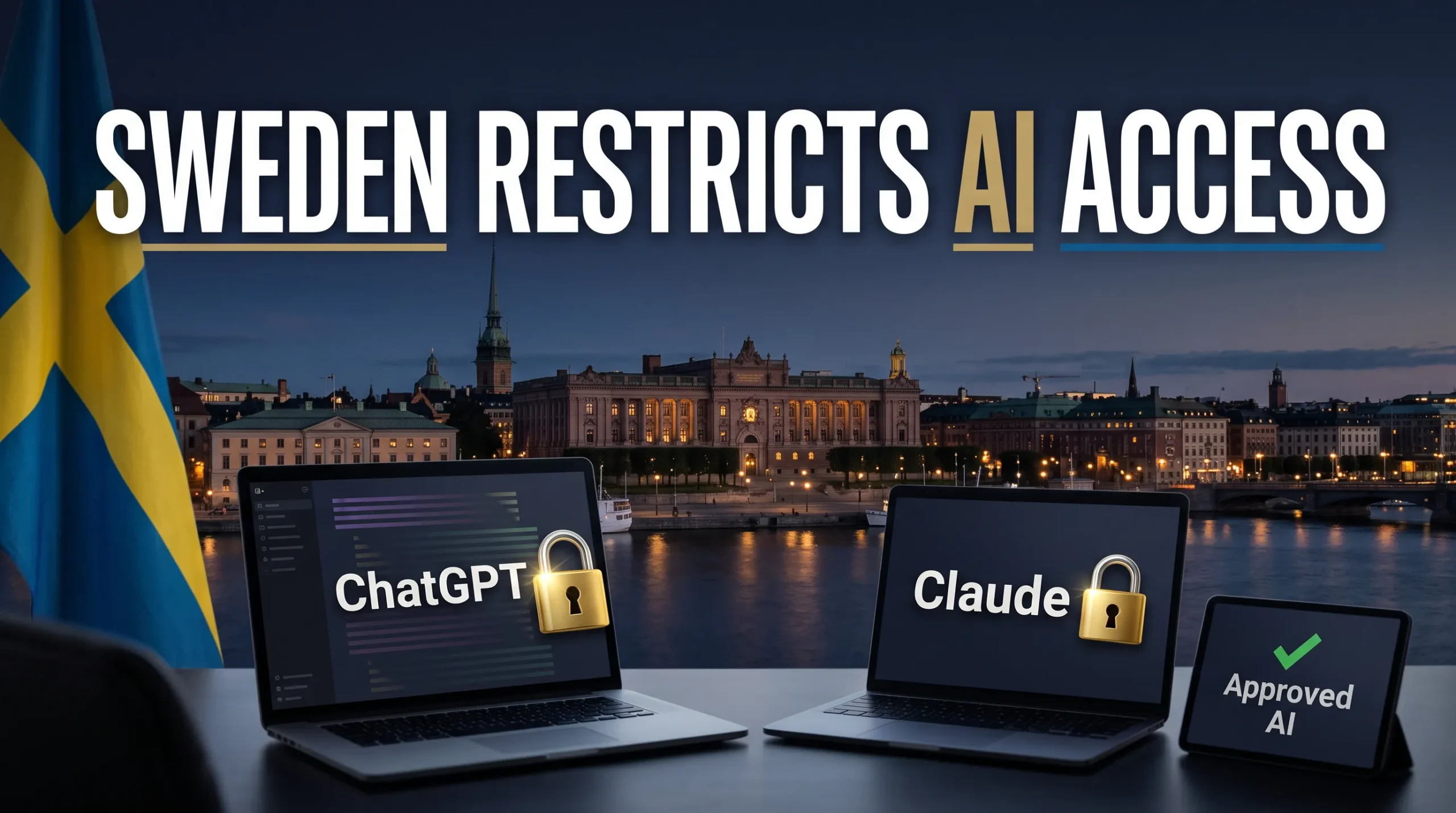
The measure took effect on Monday 26 October 2026. It prevents staff at the Government Offices, known in Sweden as the Regeringskansliet, from reaching the public browser interfaces for the two AI services on their work computers.
The change was first reported by Sveriges Radio’s Ekot programme on 23 October. Sweden’s Government Offices subsequently confirmed the scope of the restriction to public broadcaster SVT.
What has Sweden restricted?
Staff can no longer open the public ChatGPT and Claude websites from their government-issued computers. They are instead directed towards AI systems that have been approved for official use, including Microsoft Copilot.
Crucially, the government told SVT that employees can still access the underlying ChatGPT and Claude language models through an approved platform called Intric. The decision concerns the route through which government information can be submitted to AI tools, rather than an outright rejection of those models.
Ordinary members of the public in Sweden have not been barred from using ChatGPT or Claude by this measure.
Why has the restriction been introduced?
According to Ekot, digitalisation director Mikael Wettercrantz warned in internal government communications that using AI services without an agreement could have consequences for information security.
The Government Offices have also reviewed and strengthened security around their approved Microsoft Copilot service. Officials did not disclose the technical details of those measures, citing security considerations.
Ekot reported that the Swedish Tax Agency and the National Board of Institutional Care had already implemented restrictions, while the Enforcement Authority was considering its position.
The broadcaster also cited an internal audit at Sweden’s Transport Administration which had identified problematic use of open AI services, including concerns about the sensitivity of information entered and the handling of AI-generated answers.
Those findings illustrate the risks authorities are seeking to manage. They do not establish that ChatGPT or Claude caused a confirmed breach within Sweden’s Government Offices.
How does this compare with the UK?
The underlying policy is familiar to British civil servants. In a written parliamentary answer on 9 June 2026, the Department for Culture, Media and Sport said ministers, advisers and officials may use only generative AI tools approved by their department for official business.
The department said consumer AI services cannot be used for official work unless specifically assessed and approved, while secured enterprise versions can be configured to protect departmental data.
The UK’s AI Playbook for the UK Government advises officials not to enter non-public official information into public AI services unless it has been cleared for publication or is covered by appropriate arrangements.
What the decision means
Sweden is not abandoning artificial intelligence in government. It is drawing a line between public AI websites and approved services operating under government security arrangements.
The central issue is who controls access, what information is entered and how that information is protected. Sweden’s new restriction makes that distinction explicit.