Britain’s traditional analogue telephone network is due to close on 31 January 2027, but this does not mean landline phones are disappearing. Most households can keep making and receiving calls after moving to a digital service.
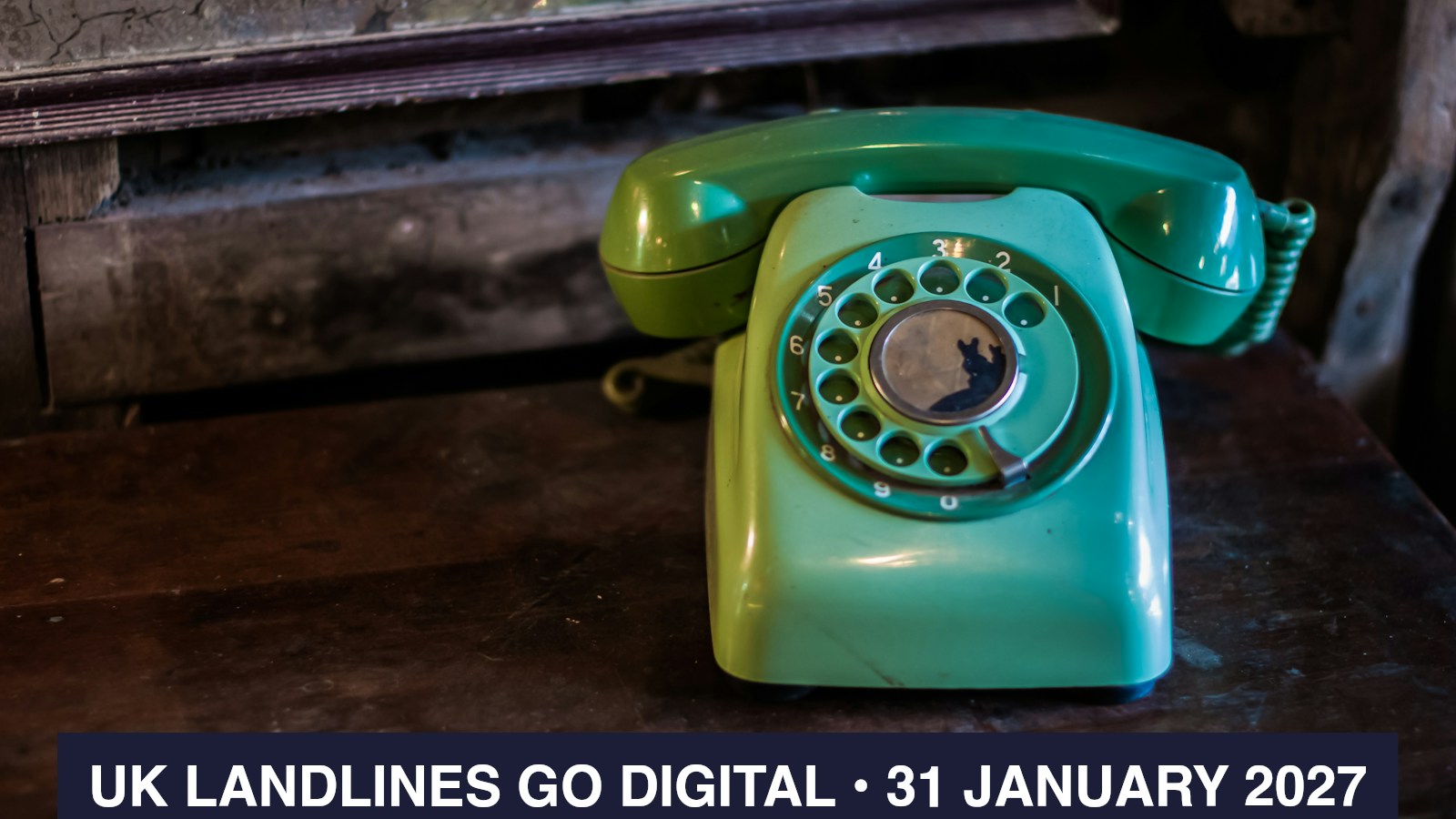
Openreach has warned that approximately one million legacy lines remain in use across the UK, including around 300,000 at business premises. The company says connections that are not migrated before the deadline could be disrupted, although a temporary emergency service may be available to some customers.
In an announcement issued ahead of the final three months, Openreach urged customers and organisations to identify equipment still using the old Public Switched Telephone Network (PSTN).
Will my landline stop working?
Not simply because the analogue network is closing. Under the switchover, telephone calls will be carried using digital technology, generally through a broadband router rather than the traditional wall telephone socket.
According to Ofcom’s consumer guidance, most users can keep their existing telephone number and many can continue using their current handset. Their provider should explain if a router, adaptor or replacement handset is needed.
People who do not already have broadband should speak to their phone provider about an appropriate option. They do not necessarily have to buy a conventional home broadband package solely to keep a landline service.
The 31 January 2027 deadline applies to the BT/Openreach legacy network. Ofcom says other operators with their own networks, including Virgin Media O2 and KCOM, have separate retirement plans without the same confirmed date.
What happens if someone has not switched by January?
Openreach says some unmigrated lines may be moved to Emergency Voice Access (EVAc), a temporary last-resort service intended to preserve basic telephone calling for a limited period. Features such as caller display, call forwarding or voicemail may not work. Some customers could lose service altogether.
Openreach has also said it will try to preserve linked broadband connections where technically possible. EVAc is not a guaranteed alternative to arranging a proper digital service, and customers should not rely on being transferred automatically.
Care alarms and vulnerable customers face additional risks
The most serious concern is not an ordinary household telephone but equipment that depends on the analogue network, including personal care alarms, emergency pendants and warden-call systems.
In guidance published on 8 October, the Department of Health and Social Care reported that research carried out in winter 2025–26 and May–June 2026 found approximately three-quarters of grouped-living telecare alarms and one-third of personal alarms were still analogue among the systems surveyed.
The figures are drawn from a sample, not a census of every alarm in the country, but they highlight how much safety-critical equipment may still need attention.
Ofcom advises anyone with a personal alarm, health pendant, security system or other telephone-connected device to tell both their telephone provider and the equipment supplier before the line is changed. A provider may need to pause migration until a safe arrangement is in place.
The regulator has previously taken enforcement action over failures to protect telecare users. In December 2025, Ofcom fined Virgin Media £23.8 million after finding that its migration practices had put thousands of vulnerable customers at direct risk of harm.
What happens in a power cut?
Unlike traditional analogue telephones, digital voice services usually need mains electricity to operate. A telephone plugged into a broadband router may therefore stop working if the electricity fails.
Ofcom says providers must offer a free emergency back-up solution, lasting at least one hour, to customers who depend on their landline and have no working mobile phone or reliable mobile signal. Customers should explain their circumstances before migration so the provider can assess their needs.
Businesses may have more than a telephone to replace
Openreach says its remaining business lines are often the most complicated. Analogue connections can still operate card terminals, lift emergency phones, fire and security alarm signalling, door-entry systems and building management equipment.
The company listed 156,141 legacy lines in its Wessex region, alongside 250,473 across London and the South East. These are network-region figures, not counts of households at risk of losing telephone calls.
Businesses are being urged to audit every line and connected device, identify the supplier responsible for each service and test replacement systems before switching off the old connection.
What customers should do now
- Check whether your phone service is already digital. If you are unsure, contact your provider using the number on a recent bill or its official website.
- Tell the provider if you use a medical or personal alarm, have a disability, need extra installation help, or cannot rely on a mobile phone during a power cut.
- Ask what equipment needs changing, whether your existing handset and number can be retained, and how emergency calls will work during an electricity outage.
- If you manage sheltered housing, lifts, security alarms or payment terminals, check every analogue-connected system with its supplier rather than assuming a phone-line upgrade covers it.
- Be alert to fraud. Citizens Advice warns that anyone demanding a fee specifically to switch your home phone line to digital may be a scammer. Do not give bank details to unexpected callers.
The transition has been planned for years, and for most people it should be straightforward. The urgent task now is identifying those whose safety, communications or essential equipment still depend on the old network.
Sources and further information
- Openreach: warning to businesses and latest remaining-line figures
- Openreach: home customer guidance and EVAc
- Ofcom: what digital landlines mean for customers
- Department of Health and Social Care: telecare migration guidance
- Ofcom: Virgin Media telecare enforcement decision
Featured image photograph: Satit Wongsampan / Unsplash. Graphic adaptation: Fish 4 News.