Investigators are reviewing earlier signalling failures on Spain’s Madrid–Seville railway after 69 people died in the Urda train collision. Renfe has issued stricter safety instructions.
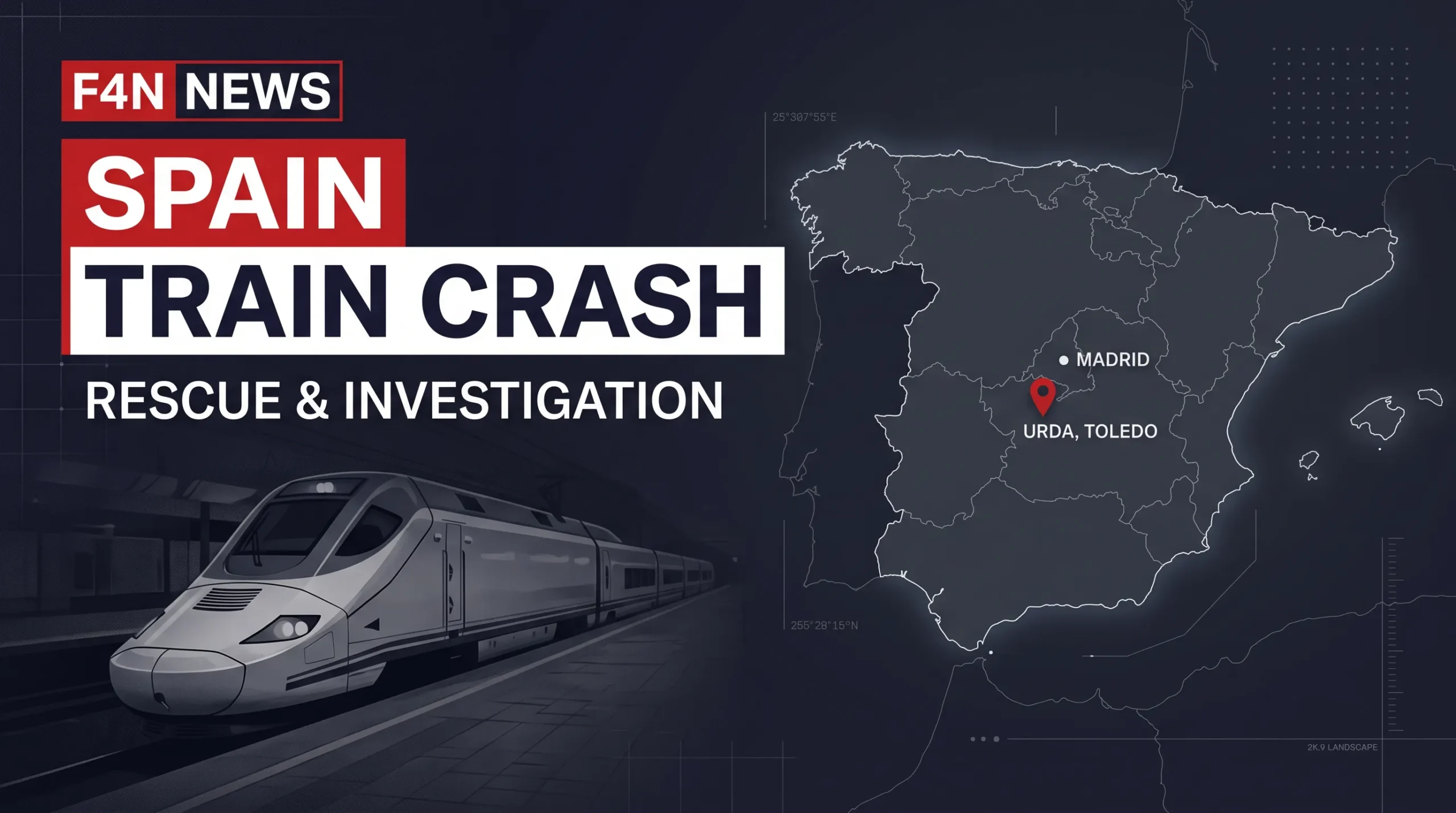
On 28 October, a Renfe AVE train struck the rear of a stationary Iryo train near Urda, Toledo. The collision happened at about 8.53am local time on the Madrid–Seville high-speed line, Renfe said. The provisional death toll stood at 69 on 2 November, according to the Castilla-La Mancha regional government.
Investigators have not established whether the instruction given before the crash was an isolated mistake or part of a wider practice. No final technical report has determined responsibility for the collision.
Earlier LZB failures are being reviewed
LZB is a train-protection system designed to monitor railway traffic and stop trains when its communications fail. Transport Minister Óscar Puente said there had been 170 LZB transmission interruptions on the Madrid–Seville line during 2026, including 13 in the section linked to Urda. The previous interruption there was reported on 14 October, two weeks before the crash.
That does not mean there were 170 near-collisions. Puente said many interruptions were resolved immediately, and about three-quarters were caused by external factors such as cable theft, work on the railway and bad weather.
El País reported that investigators and judicial police will examine earlier failures, including the instructions Adif controllers gave drivers before allowing trains to move again. They want to establish whether the instruction to resume “normal running” before the Urda collision was an isolated error or had been used previously.
Drivers’ union raises concerns about earlier instructions
The train drivers’ union SEMAF has called for tougher rules on restarting trains after an LZB failure. In a submission reported by Cadena SER, the union alleged that drivers had previously been told to resume normal running when the rules required “marcha a la vista”, meaning proceeding cautiously enough to stop within the distance they can see to be clear.
SEMAF said earlier examples were recorded in internal safety reports, known as PIRSC reports. Fish 4 News has not seen those documents, and no published finding by the independent accident investigators has confirmed the union’s allegation. It would be premature to conclude that this was routine practice at Adif.
What Renfe’s new instruction requires
A two-page Renfe instruction dated 31 October and effective from 1 November sets out the response to loss of LZB transmission on high-speed lines. The document, labelled CR-V No. 32/2026, applies to Renfe drivers and describes a partial blockage as a degraded situation requiring an immediate stop.
- The driver must not restart after a partial transmission loss until receiving the LZB3 formal message from the traffic controller.
- Restart must be under “marcha a la vista” and must not exceed 40km/h until the signal specified in the LZB3 message has been passed.
- Before accepting that message, the driver must ask the controller to confirm that no other train is in the relevant BSL signalling block.
- The LZB3 message does not authorise a train to pass a stop signal; it permits movement only as far as the next signal.
The existing railway regulations already require drivers to proceed on sight following this type of transmission failure. Renfe’s new instruction reinforces that rule by specifying the LZB3 authorisation, a 40 km/h limit and confirmation that no other train is in the same section of track.
What is known about the Urda sequence
Initial reporting indicates that an LZB transmission failure at about 8.30am stopped six trains across a 63 km section of railway. Renfe’s AVE 2080 subsequently received instructions from Adif control to restart using lineside signals and continue at normal speed. An Iryo train remained stationary ahead, near Urda station.
The AVE struck the rear of the stationary Iryo at about 8.53am. The investigators’ initial 24-hour note is a preliminary account, not a final report. Key questions remain: why the signalling system failed, what controllers knew about the trains’ positions, whether the correct restart procedure was followed and why other safeguards did not prevent the collision.
Urda is not the Adamuz crash
The 28 October collision near Urda must not be confused with the separate 18 January 2026 disaster at Adamuz, Córdoba. The Adamuz sequence began with an Iryo derailment before a Renfe Alvia struck part of that train; a later official decree recorded 45 deaths. Urda involved a Renfe AVE running into the rear of an Iryo that was stopped ahead, and its causes are being investigated separately.
Earlier Fish 4 News coverage
- Original breaking report: first confirmed details from Urda
- Follow-up: emergency response and developing casualty figures
Sources and further reading
- Renfe: statement on the Urda collision
- Spanish Official Gazette: official mourning decree
- Castilla-La Mancha government: 2 November casualty and hospital update
- AITAT: first 24-hour note on the Urda investigation
- Official Railway Traffic Regulations
- Renfe instruction CR-V No. 32/2026
- El País: review of earlier LZB failures and restart orders
- Cadena SER: SEMAF submission to the Railway Safety Agency
- RTVE: Renfe’s 40km/h instruction
This article distinguishes confirmed facts from reported investigative lines. It will be updated when AITAT publishes further findings.