The Democrats could win the 2026 midterm elections and still emerge with a dangerously mistaken idea of what American voters want. The warning comes, surprisingly, from John Major’s Britain in 1992.
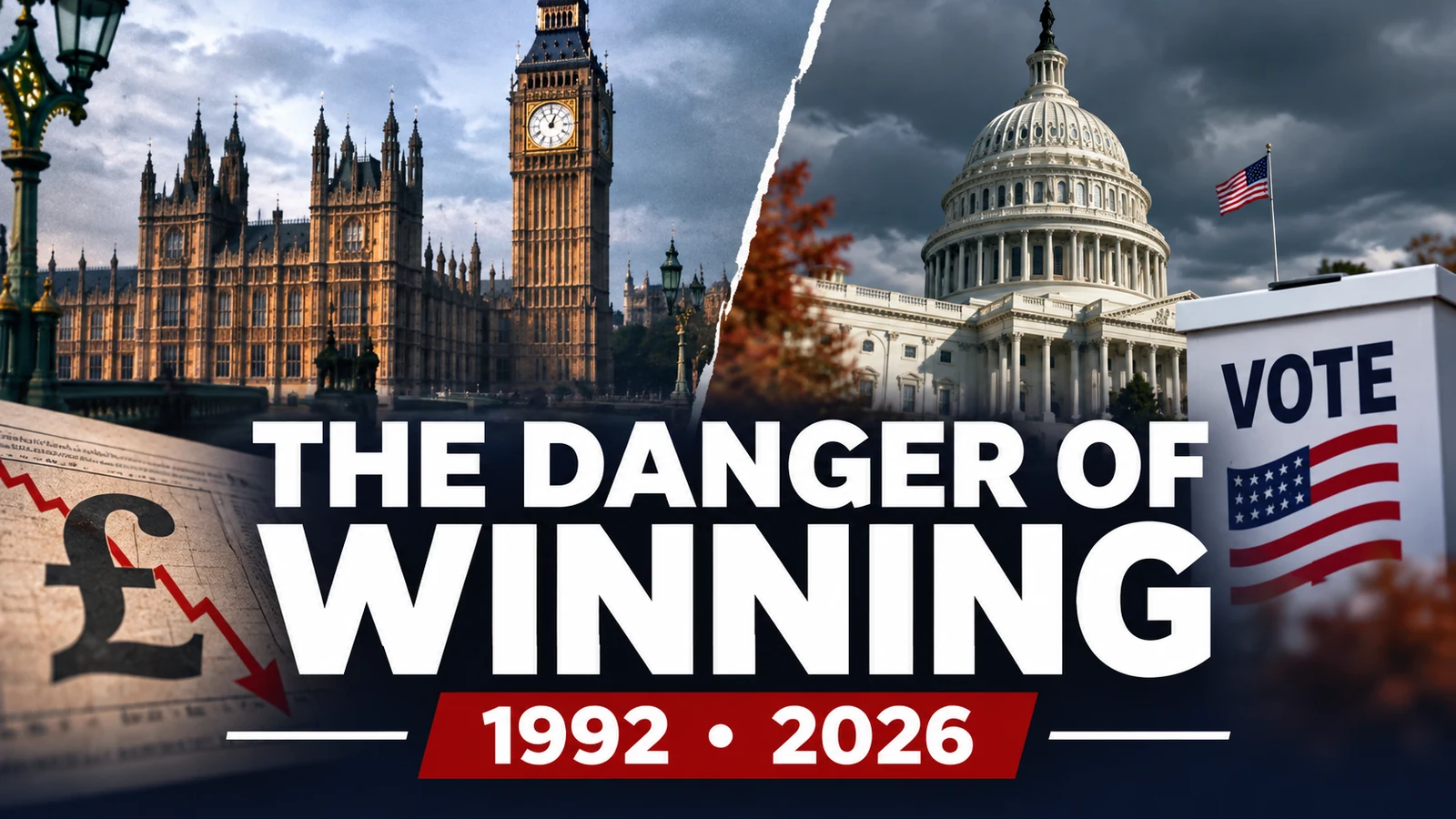
On 9 April 1992, Major’s Conservatives won a general election that many had expected Labour to take. Five months later, Britain was forced out of the European Exchange Rate Mechanism. Black Wednesday did not immediately remove the government, but it badly damaged the Conservatives’ claims to economic competence.
In the United States, Donald Trump’s victory in November 2024 returned him to the White House after an election dominated by frustration over prices, the economy and immigration. Two years later, it is his party facing a possible electoral reckoning. The historical parallels are imperfect, but the political lesson deserves attention: sometimes winning power means taking ownership of problems that can destroy a party’s reputation.
What happened to John Major in 1992?
The Conservatives won in April 1992. On 16 September, known as Black Wednesday, the government withdrew sterling from the Exchange Rate Mechanism after efforts to defend the pound failed. The Bank of England’s history records the episode and estimates that defending sterling cost the Treasury more than £3 billion.
In 1997, Labour under Tony Blair won 418 Commons seats while the Conservatives took just 165, according to the House of Commons Library. Black Wednesday was not the sole cause of that defeat. Conservative divisions, scandals and Blair’s appeal also mattered. Nevertheless, the collapse of the party’s economic credibility became an enduring political liability.
Now consider the counterfactual. What if Neil Kinnock had won in 1992 and faced a sterling crisis soon afterwards? A Labour government might have made different choices, so we cannot assume precisely the same events would have occurred. But voters could easily have blamed a new Labour administration for an economic problem rooted partly in decisions made before it took office.
That is the relevance to America’s political moment. The party holding office when households feel the pain is often the party that takes the blame.
Inflation helped Trump win. Now he must answer for prices
The 2024 election was not simply a referendum on statistics about jobs or economic growth. It was also a referendum on what families were paying for food, housing and everyday life. AP VoteCast found that voters who felt their finances were falling behind strongly favoured Trump.
Much of the inflation that angered voters followed the pandemic, disrupted supply chains and energy-price shocks. That did not stop the incumbent Democrats being punished for living costs that had risen sharply during their time in office. Slower inflation did not put prices back where they had been.
Trump promised relief. Yet the US Bureau of Labor Statistics reported that prices for food at home were 1.8% higher in September 2026 than in September 2025, while the overall consumer price index was up 3.7%. Those figures cannot fairly be attributed entirely to the president, but they do challenge any suggestion that affordability has simply been solved.
Had Kamala Harris won in 2024, Democrats might instead have spent the following two years defending the same stubborn cost-of-living problems. By winning, Trump took responsibility for what happened next.
Did Democrats deliberately lose in 2024? There is no evidence for that
It is tempting to wonder whether Democratic leaders understood the political risks of another term and preferred to let Trump carry them. But this is a theory without convincing supporting evidence. It also asks us to believe the party would willingly surrender the presidency, executive authority and judicial appointments in the hope of eventual electoral advantage.
A more credible explanation is political misjudgement. Joe Biden withdrew from the race in July 2024, leaving Harris to campaign against Trump while also defending the record of the administration in which she served. Democrats spent vast sums and argued that the stakes were enormous, but failed to convince enough voters that they offered the change people wanted.
There are legitimate questions about the role of wealth in US politics. Reuters reported that Elon Musk spent approximately $259 million helping elect Trump. That raises important questions about political influence. It is not, however, evidence that the votes themselves were falsified. The federal election-security agency CISA said it had no evidence of malicious activity materially affecting the integrity of the 2024 election.
The danger of mistaking rejection for endorsement
The Democrats enter Tuesday’s 3 November congressional elections with a significant polling advantage. A Reuters/Ipsos survey conducted 22 to 26 October found 53% of likely voters favouring a Democratic candidate against 44% for a Republican. But a national polling lead is not a guarantee of control of either chamber. Turnout, constituency boundaries and individual state races matter.
If Democrats do make substantial gains, they will have an understandable reason to celebrate. The mistake would be to conclude that their existing leadership and political message have thereby been vindicated.
A vote against Trump is not automatically a vote of confidence in the Democratic Party.
Voters might be rejecting high prices, the conduct of the administration, immigration enforcement or wider uncertainty without being particularly enthusiastic about the people asking to replace Republican lawmakers. Winning an election is one challenge. Understanding why voters gave you their support is another.
Mamdani offers a different political test
New York mayor Zohran Mamdani offers a useful contrast, not because everyone agrees with him, but because his promises can be measured against actual decisions. The city’s independent Rent Guidelines Board voted in June 2026 to freeze rent increases for one- and two-year rent-stabilised leases. The administration also committed to covering childcare fees for approximately 22,000 eligible low-income families.
New York’s free 2-K childcare programme launched in selected neighbourhoods in autumn 2026, with wider expansion planned. That is real movement, but not the same as universal childcare already being delivered. Other major ambitions, including citywide free buses and municipal grocery stores, remain works in progress. It is important not to award full credit for promises still awaiting completion.
The wider lesson is that an opposition party can give voters something more substantial than a list of reasons to dislike the government. It can describe what would actually change, then invite people to judge the results.
A victory is not a substitute for a programme
The 1992 comparison is not a prediction that the Republican Party will suffer its own 1997-style collapse. Britain’s Conservatives also faced problems unique to their time. And the Republicans, even after a bad midterm, would retain a substantial electoral base, influence at state level and a president still in office.
Nor is the outcome of the 2026 election known. Pollsters can be wrong, early voters cannot be assumed to have supported their registered party and an unexpected result would not, on its own, demonstrate electoral fraud.
But the central question survives any result. If Democrats win, do they use the opportunity to build a credible programme for living standards, healthcare, housing and accountable government? Or do they decide that opposing Trump was enough?
The greatest danger for the Democrats might not be defeat on Tuesday. It might be victory followed by the conviction that they have nothing to learn.
Sources and further reading
- Bank of England: UK withdrawal from the ERM in September 1992
- House of Commons Library: historical general election results
- Associated Press: how economic concerns shaped the 2024 vote
- US Bureau of Labor Statistics: September 2026 CPI
- Ipsos: October 2026 congressional voting intentions
- New York Mayor’s Office: rent freeze announcement
- New York Mayor’s Office: childcare costs announcement
- Reuters: Elon Musk’s 2024 political spending