The Autumn Budget 2026 offers a £100 energy payment to millions of households in England, extends temporary tax relief on electricity and fuel, and raises minimum wages. But the independent economic forecast points to weak growth, stubborn inflation and difficult decisions on public spending still to come.
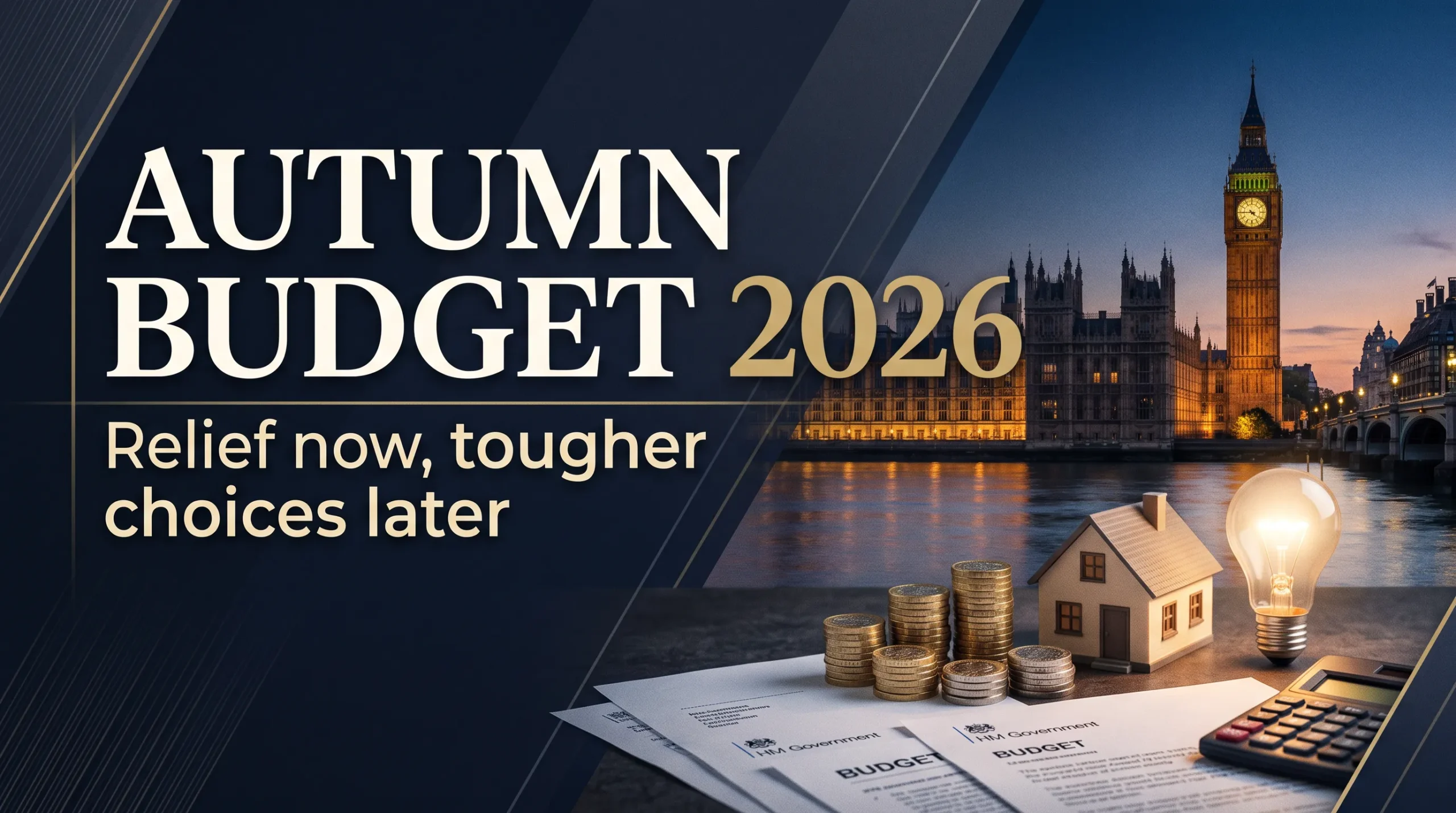
Chancellor John Healey delivered the Budget on Wednesday 28 October, presenting it as short-term breathing space for families and businesses. The Treasury Budget document confirms targeted support now alongside tax and spending measures that take effect over several years.
The distinction matters. A one-off payment may help with a bill this winter, but it does not guarantee households will be better off next year. The Office for Budget Responsibility (OBR) forecasts that real disposable income per person will fall during 2026 and grow only marginally in 2027.
Energy bills: who gets the £100 payment?
The government says a one-off £100 Household Energy Payment will be paid directly into bank accounts from January 2027 to households in council tax bands A to D in England, reaching up to 20 million households. It is a payment, not a permanent annual discount.
Scotland, Wales and Northern Ireland will receive associated funding through the Barnett formula. Their governments will decide how to use it, so it would be incorrect to say that every eligible household across the UK will automatically receive the same payment.
Eligibility is based on property band rather than income. Consequently, some relatively wealthy owners in lower council tax bands may qualify while people with lower incomes in higher-band properties will miss out. The Resolution Foundation has highlighted this particularly in London and the South East.
The government is also extending the temporary 0% VAT rate on domestic electricity until 1 July 2027. The Treasury estimates that the extension could lower the April 2027 Ofgem annual price cap by around £50. The final bill for an individual home will depend on its energy use and tariffs.
Fuel duty and wages: dates that matter
- The existing 5p-per-litre fuel duty cut and duty freeze are extended to 1 July 2027. The government has not made the cut permanent.
- From 1 April 2027, the National Living Wage for workers aged 21 and over is set to rise 3.9% to £13.21 an hour.
- The minimum wage for 18 to 20-year-olds is due to rise to £11.27 an hour from the same date.
- The government estimates approximately 2.3 million workers will benefit from the minimum wage increases.
The Treasury puts the annual gross earnings increase for someone working full time on the National Living Wage at about £910. That is before income tax, National Insurance and any changes to working hours or benefits.
Savings, property income and the self-employed
Headline rates of income tax on employment earnings, National Insurance and VAT have not been increased. However, the Budget raises the planned tax rates on taxable savings and property income by a further two percentage points from April 2027, on top of increases announced in the 2025 Budget. Tax-free savings inside ISAs are treated differently.
The £20,000 annual cash ISA allowance remains in place. This retains an existing limit rather than introducing a new £20,000 tax-free benefit.
For people earning small amounts from self-employment or side work, the Income Tax Trading Allowance will rise from £1,000 to £3,000 on 6 April 2027. The allowance applies to qualifying gross trading income and should not be confused with a £3,000 exemption on all forms of income or with a separate deduction for actual expenses.
The Budget also increases approved tax-free mileage rates for people using their own vehicles for work, with different implementation dates for the first 10,000 miles and additional mileage. Specific eligibility and record-keeping rules still apply.
Small businesses: stronger relief for some, not all
England’s qualifying retail, hospitality and leisure businesses are the main beneficiaries of new business rates support. From April 2027, the threshold for full Small Business Rate Relief in those sectors is due to rise from a rateable value of £12,000 to £18,000, with tapered relief extending to £21,000.
The Treasury estimates that about 70,000 additional properties will pay no business rates under the expanded relief. Other qualifying properties in the sectors receive measures intended to prevent above-inflation rates increases over two years. Pubs, social clubs and most live-music venues receive additional targeted relief.
These are not blanket cuts for all small firms. Businesses outside retail, hospitality and leisure may not qualify, and rising wage bills or operating costs could offset benefits for some employers.
From 1 October 2027, online marketplaces are due to take responsibility for collecting VAT on qualifying sales made by certain UK sellers. The measure targets VAT compliance, but its practical implications will depend on how platforms implement the requirements.
What the OBR forecast says
The independent OBR expects UK economic growth of 1.2% in 2026 and 1.0% in 2027, before a gradual improvement. It forecasts consumer price inflation of 3.4% in 2027 and real household disposable income per person falling by 0.8% in 2026, followed by growth of just 0.1% in 2027. These are calendar-year forecasts, not guarantees about any individual household.
Public sector borrowing is projected to fall from 4.2% of GDP in 2026-27 to 1.8% by 2031-32. The current-budget fiscal rule is forecast to be met with around £15 billion of headroom in 2029-30. That is a forecast margin, not a pot of money available for immediate spending.
The Institute for Fiscal Studies says the government has accepted more borrowing in the short term while relying on later revenue increases and tighter public spending. It argues that the planned squeeze on departmental budgets presents a major challenge to delivering the forecast.
Will households actually be better off?
Treasury modelling suggests that the direct effect of the latest Budget policies is more favourable, on average, for lower-income groups. But this compares the new measures with a scenario without them. It does not mean every low-income household will see its overall living standards rise.
The Resolution Foundation has warned that weak income growth and higher living costs could continue to squeeze families despite the short-term help.
What remains unresolved?
Several measures are temporary or subject to further decisions. The £100 payment is one-off, electricity VAT relief and the fuel duty freeze are scheduled to end in July 2027, and the detail of changes to energy standing charges has not been settled.
The 2027 Spending Review will be important in determining how ministers fund competing commitments on the NHS, defence, welfare and other public services within the overall spending plans. Higher inflation or borrowing costs could make those choices harder.
The Budget therefore gives some households and high-street businesses tangible support, while leaving the question of longer-term improvement in living standards largely dependent on economic conditions and decisions still to be made.
Sources
- HM Treasury: Budget 2026, full policy document and fiscal scorecard
- Office for Budget Responsibility: October 2026 Economic and Fiscal Outlook
- HMRC: Budget 2026 overview of tax legislation and rates
- Institute for Fiscal Studies: Initial analysis, 28 October 2026
- Resolution Foundation: Initial household living-standards assessment