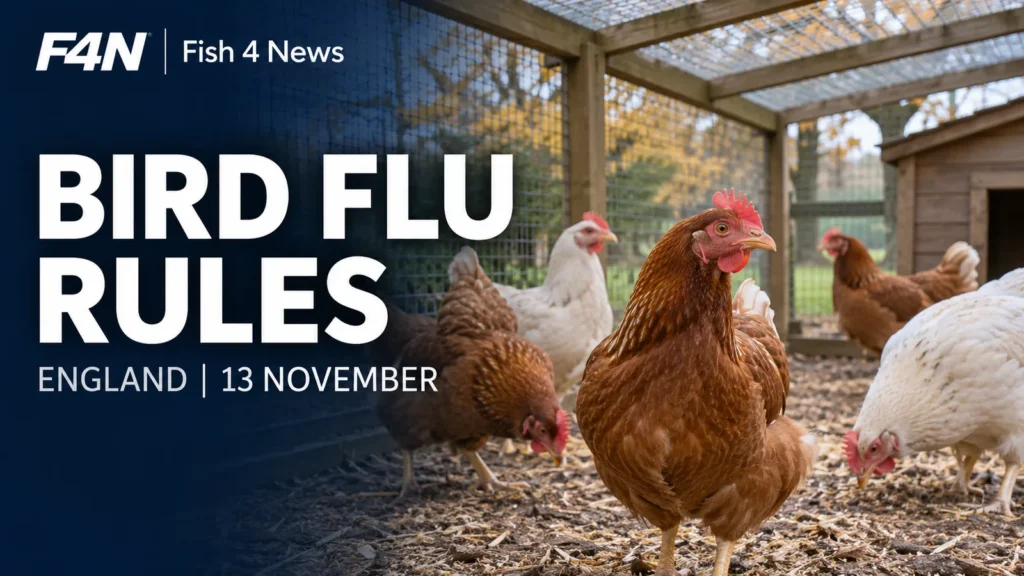
New bird flu restrictions apply across England, but not every keeper of backyard chickens will be required to house their birds from Friday 13 November.
Defra announced a national housing order on 11 November 2026 as detections of highly pathogenic avian influenza (HPAI) increased in kept and wild birds. There are two measures with different start dates: compulsory biosecurity from 09:00 on 11 November, and housing for specified keepers from 00:01 on 13 November.
Who must keep their birds indoors?
From Friday 13 November, England’s housing order applies to:
- Keepers with 50 or more poultry or other captive birds, subject to limited exceptions, including certain zoo birds.
- Keepers with any number of birds who sell or give away eggs, poultry products or live birds. This can include smaller backyard flocks.
People who give surplus eggs to friends or neighbours should not assume they are outside the housing rule because they have only a few hens or do not charge for the eggs. The wording includes giving products away.
What if I have a small flock of backyard chickens?
If you keep fewer than 50 birds solely for your own household and do not sell or give away eggs, poultry products or live birds, the nationwide housing requirement does not automatically apply. However, you must still follow the biosecurity rules, and any additional restrictions in a local disease control zone.
Birds that are not legally required to be housed may remain in protected, fenced or netted outdoor areas. They must be prevented from accessing ponds and watercourses, with feed and drinking water protected from wild birds. A netted run should not be assumed to satisfy a compulsory housing requirement without checking the official housing guidance.
What rules apply to every bird keeper?
An England-wide Avian Influenza Prevention Zone (AIPZ) began at 09:00 on 11 November and imposes mandatory biosecurity on commercial poultry farms, pet bird keepers and small backyard flocks alike. It is separate from the housing requirement.
- Clean and disinfect footwear, clothing, equipment, vehicles and housing, using approved products correctly.
- Restrict unnecessary visitors and movements around bird areas, and keep required records, including movements, deaths and egg production.
- Keep bedding, feed and water away from wild birds and contamination.
- Carry out effective rodent and pest control.
- Prevent direct and indirect contact with wild birds and their droppings.
- Monitor birds for signs of disease and report suspected infection immediately.
Premises with 500 or more birds face additional biosecurity requirements. Specialist rules also apply to some zoos, game-bird keepers, racing pigeons and birds of prey. Defra has published detailed biosecurity guidance and a keeper’s checklist.
Are there exceptions to the housing order?
Defra identifies some zoo birds as an example of an exception. Housing ducks, geese, game birds and other species may raise welfare or practical difficulties, but keepers should not assume that an outdoor pen or welfare concern automatically exempts them. Obtain veterinary or Animal and Plant Health Agency (APHA) advice and consult official welfare guidance.
Local protection and surveillance zones around confirmed outbreaks can impose stricter controls, including housing and movement restrictions. Keepers should check their local disease control zone before moving birds or eggs.
Do I need to register backyard chickens?
Yes. Keepers of poultry and other captive birds in England are generally required to register their premises with APHA within one month, including small backyard flocks. Narrow exceptions exist for certain pet birds that stay permanently inside a dwelling with no outdoor access. Registration is a separate legal requirement from the new housing order. See the registration guidance.
Is bird flu a risk to people or food?
The UK Health Security Agency says the current risk to human health is very low. Bird flu mainly affects birds, although rare human infections are possible. The Food Standards Agency says properly cooked poultry, poultry products and eggs are safe to eat.
Do not touch sick or dead wild birds. Suspected bird flu in poultry or captive birds is legally notifiable and must be reported immediately to APHA on 03000 200 301 in England. Check the symptoms and reporting procedure.
Why have the restrictions been introduced?
Defra cites increasing confirmations of highly pathogenic avian influenza in kept birds and detections in wild birds. Migratory waterfowl and contaminated droppings, footwear, equipment or feed can spread the virus to domestic flocks. The government says it does not currently anticipate an overall shortage of Christmas turkeys or seasonal poultry.