Coyotes have been spotted exploring California’s new wildlife bridge above the busy US 101 freeway, weeks before the landmark crossing is due to open to animals on 2 December 2026.
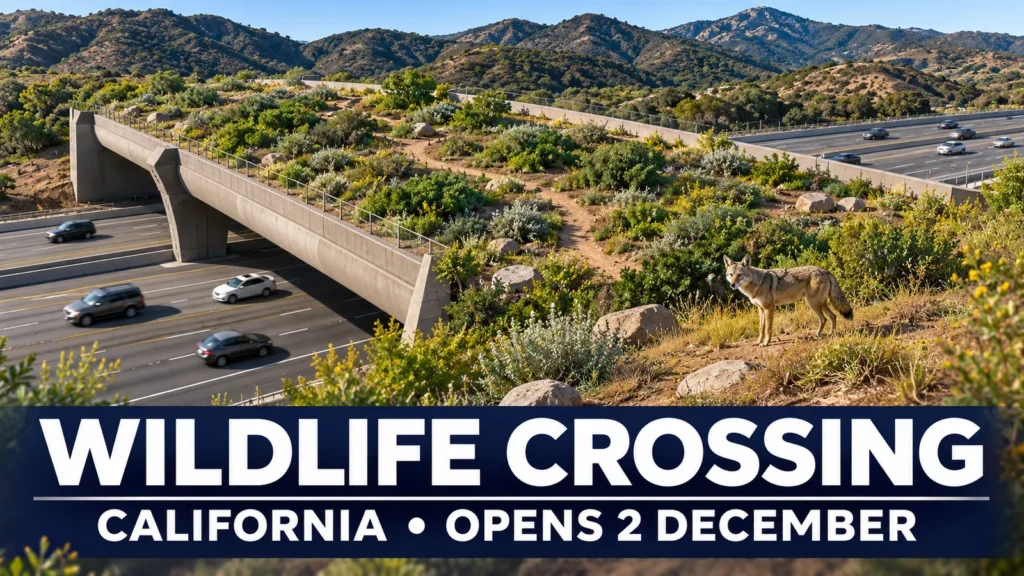
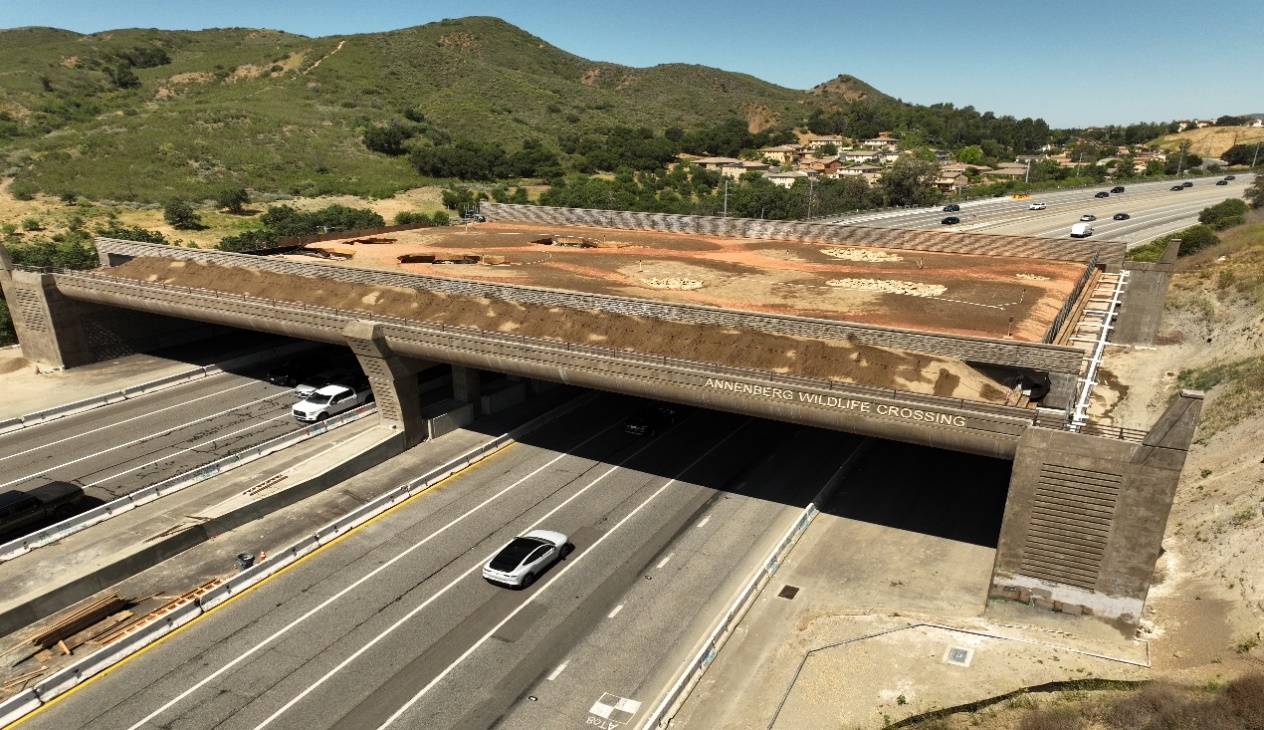
The Wallis Annenberg Wildlife Crossing in Agoura Hills, about 35 miles (56km) northwest of downtown Los Angeles, is designed to reconnect habitats divided by roads and urban development. The approximately $114 million project has been described as the world’s largest urban wildlife crossing.
Once open, its planted surface will provide a route between the Santa Monica Mountains and the Simi Hills, crossing a stretch of freeway used by more than 300,000 vehicles a day. The structure also spans nearby Agoura Road.
Coyotes arrive before official opening
On 28 October, National Park Service scientists photographed a coyote climbing the southern approach to the unfinished crossing. Further camera footage subsequently showed a coyote on the bridge itself, according to local reporting. The Associated Press reported on 18 November that three young coyotes had also been spotted in vegetation on the structure.
Those sightings are an encouraging early sign, but they are not proof that the project has already restored a complete wildlife corridor. Earlier sightings occurred while construction work still prevented an animal from completing the full end-to-end route. AP described a later lone coyote as believed to have crossed safely; independent confirmation of a complete crossing has not been established in the National Park Service material reviewed by Fish 4 News.
Wildlife researchers have also observed bobcats, grey foxes, mule deer and mountain lions using a nearby trail. The crossing is intended to benefit a much wider range of species, from larger mammals to small reptiles and insects.
Why the bridge matters for mountain lions
The main conservation concern is habitat fragmentation. Freeways make it difficult for mountain lions to move between populations, find mates and maintain genetic diversity. The bridge is designed to connect the separated landscapes without sending wildlife into fast-moving traffic.
The project also reflects the legacy of P-22, the mountain lion that became a symbol of wildlife surviving in urban Los Angeles. Its death in 2022, after injuries consistent with a vehicle strike, drew attention to the dangers animals face around the city’s roads.
A University of California, Davis report published on 10 November 2026 estimated that vehicles kill at least 780 mountain lions a year across California, around 18% of the estimated state population. That is a statewide figure, not a death toll for the US 101 crossing site.
The researchers stressed that crossings alone will not eliminate wildlife road deaths. Extensive roadside fencing is also needed to direct animals towards safe passage points and prevent them from entering traffic elsewhere.
What happens after the 2 December opening?
The opening is scheduled for Wednesday 2 December, although some planting and finishing work is expected to continue afterwards. It is a wildlife passage, not a new public walking bridge.
National Park Service scientists are installing remote cameras and carrying out longer-term monitoring. They plan to measure which species use the route, changes in wildlife movement and genetic diversity, and whether the new habitat is functioning as intended.
For now, the early coyote visits show that animals are already exploring the new landscape. Whether the crossing makes a lasting difference to wildlife populations will take years to establish.
Watch: AP footage of the wildlife crossing
Sources
- US National Park Service: monitoring and wildlife observations, 4 November 2026
- Official project FAQ: opening date and construction
- UC Davis: 2026 roadkill research, 10 November 2026
- Caltrans: 2025 construction update and official project photograph
- Associated Press: wildlife crossing report, 18 November 2026