Fewer than 38% of two- and three-year-olds in England had received a flu vaccine by 15 November, according to new UK Health Security Agency (UKHSA) figures, as influenza activity increased ahead of winter.
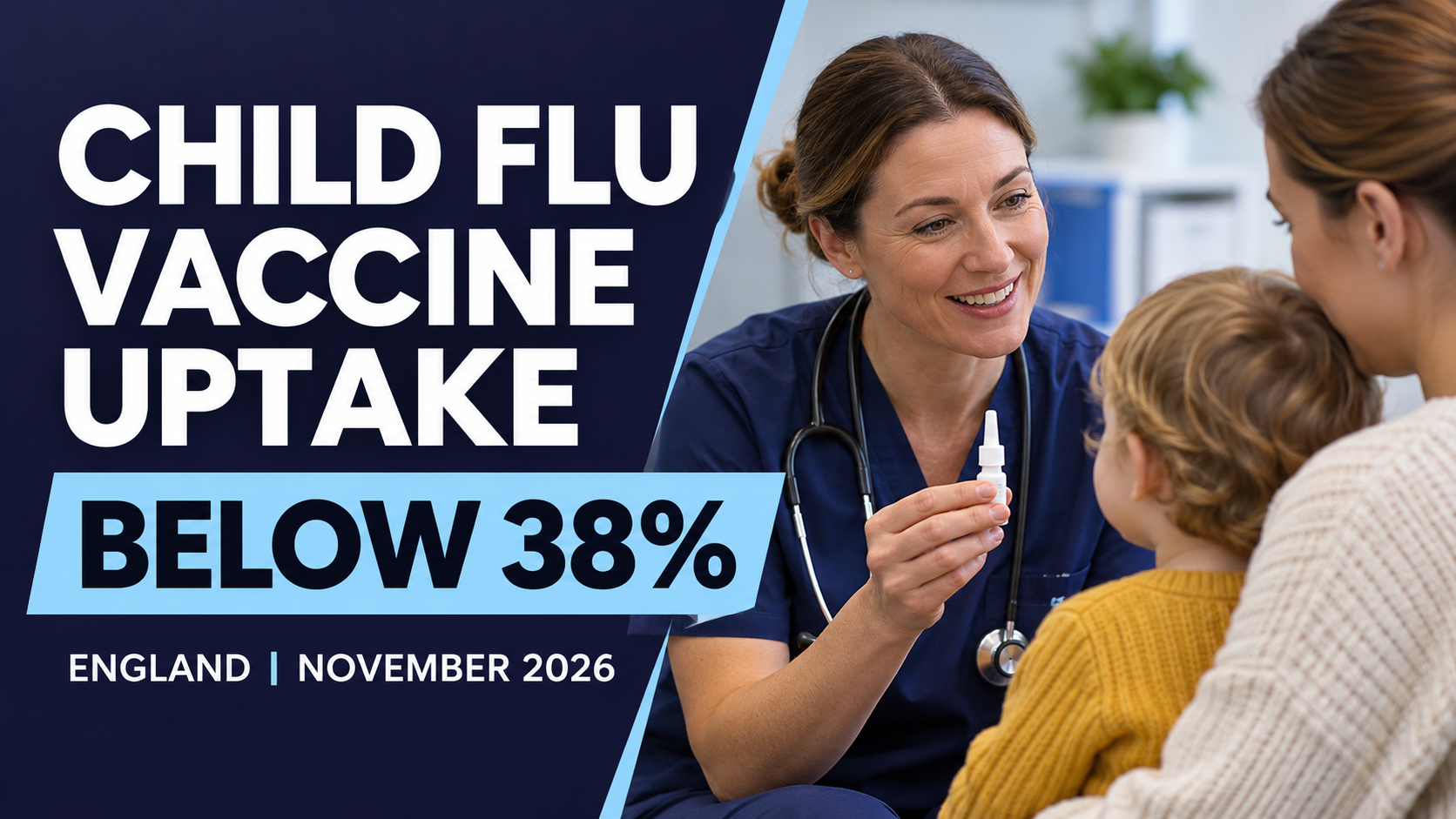
The warning issued on Thursday 19 November 2026 follows a rise in flu indicators during the surveillance week ending 15 November. UKHSA says overall flu activity remains low but is increasing, and is encouraging parents to arrange a free vaccination for eligible children.
How many two- and three-year-olds have had their flu vaccine?
The latest UKHSA national surveillance report gives provisional vaccine uptake of 37.6% among two-year-olds and 37.5% among three-year-olds in England.
At the same point last winter, the figures were 38.5% and 38.8% respectively. That is a fall of 0.9 percentage points for two-year-olds and 1.3 points for three-year-olds, but it is not a measure of final uptake for the whole season.
The figures are based on vaccination reports from 98.7% of GP practices and may be revised as reporting continues.
Is flu spreading in England?
UKHSA reported that influenza test positivity had increased to 11.4% by 15 November, compared with 8.3% one week earlier. The national flu hospital admission rate also rose from 3.76 to 4.68 per 100,000 people.
These indicators show increasing activity, not that 11.4% of the population has influenza. UKHSA continues to classify overall influenza circulation as low.
GP consultations for influenza-like illness have also risen, including among young children. UKHSA cautioned that technical issues meant fewer GP practices than expected contributed to one of its surveillance measures this week.
Why are young children considered at risk?
Flu can cause complications including pneumonia, and children under five are among the age groups more likely to need hospital care. UKHSA says approximately 6,000 children under five were hospitalised with influenza during winter 2022–23. That is a historical figure, not a count of children admitted this winter.
Dr Suzanna McDonald, UKHSA’s Flu Vaccination Programme Lead, said low coverage among young children was concerning and urged families to take up the free NHS offer. Public Health Minister Dame Diana Johnson also asked parents to book vaccination appointments.
Vaccination can reduce the chance of infection and serious complications, though it cannot prevent every case of influenza.
How does uptake compare with previous winters?
In the completed 2025–26 season, vaccination uptake among two- and three-year-olds combined reached 44.2%, up from 42.6% in 2024–25, according to UKHSA’s annual statistics.
These end-of-season figures cannot be compared directly with the provisional November 2026 totals. The latest year-on-year weekly comparison shows a modest reduction at this stage, not proof of a full-season decline or its cause.
Which children can get the free NHS flu vaccine?
Under current NHS guidance, the routine programme covers children who were two or three years old on 31 August 2026. This includes some children who have since turned four. School-age children from reception to Year 11 are also eligible, along with younger and older children who have certain long-term health conditions.
Most eligible children receive the vaccine as a nasal spray. An injected alternative is available for children who cannot receive the spray or whose families do not want a vaccine containing porcine gelatine. Parents can discuss the options with their GP or vaccination provider.
Where can parents book an appointment?
- Contact the child’s GP surgery. Parents do not need to wait for an invitation.
- Use the NHS children’s flu vaccination page to find online booking and participating pharmacies.
- School-age children are generally offered vaccination through school immunisation teams; those who miss it can contact the team about local catch-up arrangements.
Participating pharmacies can vaccinate eligible two- and three-year-olds this season. From 1 December 2026, some pharmacies will also offer catch-up appointments for school-age children who missed vaccination at school, under the 2026–27 programme arrangements.
What happens next?
UKHSA is due to release its first monthly flu vaccination uptake figures of the season on 26 November 2026. They should provide a further checkpoint on coverage, but the current data do not explain why some families have not taken up the offer.
Fish 4 News previously reported on the government’s wider flu vaccination campaign and NHS booking changes in October.