The MIRO G cargo ship ran aground on France’s Atlantic coast during a powerful storm, prompting the helicopter evacuation of all 22 crew members. Attempts to free the stranded vessel face serious technical and weather-related difficulties.
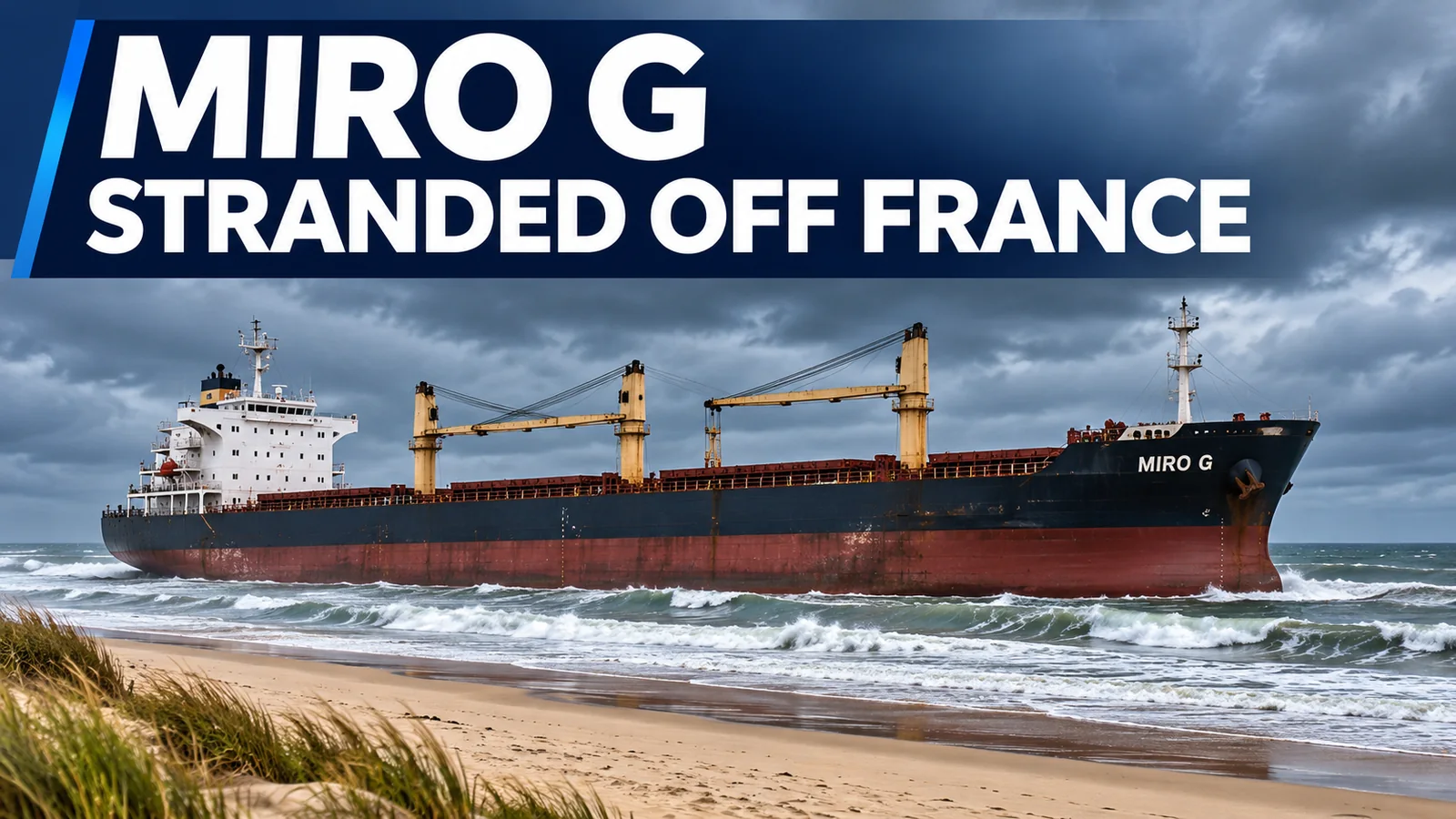
The 169-metre Maltese-flagged bulk carrier grounded near Cap de l’Homy, close to Lit-et-Mixe in the Landes region of south-west France, shortly before 1am on Friday 20 November 2026. It was not carrying commercial cargo, but fuel remaining on board means the authorities are taking precautions against possible pollution.
In the latest official situation report available to Fish 4 News on Sunday 22 November, French maritime authorities said the remaining people aboard the MIRO G had been airlifted to safety and work was continuing to prepare for a refloating attempt. The authorities had not confirmed that the ship had been freed.
What happened to the MIRO G cargo ship?
The MIRO G first reported difficulties manoeuvring in rough weather on Thursday evening, 19 November. According to the Landes prefecture, it initially anchored around three nautical miles off Cap de l’Homy, but violent winds subsequently pushed it towards the shoreline.
The French Atlantic maritime prefecture said gusts reached approximately 48 knots, equivalent to 90 km/h. The ship dragged its anchor and grounded in shallow water. Authorities activated the ORSEC maritime emergency response and a Franco-Spanish rescue cooperation plan, which brought the Spanish rescue tug Sar Gavia into the response.
Were all 22 MIRO G crew members rescued?
Yes. Nineteen of the MIRO G’s 22 crew were evacuated by helicopter on Friday 20 November. The captain and two other sailors remained aboard to assist the maritime authorities and salvage planning.
On Saturday 21 November, worsening weather prompted the evacuation of a further 11 people. That group comprised the final three crew members, four maritime assessment experts, three representatives of salvage operator Les Abeilles International and one representative of the shipowner’s insurer.
The distinction matters: 30 people were evacuated over the two days, but the MIRO G’s shipboard crew numbered 22. The additional eight were specialists and representatives who had gone aboard to assess the emergency. No serious injuries have been reported.
Why is the MIRO G salvage operation so difficult?
Before the MIRO G can be pulled off the sand, crews need to lighten it by pumping seawater out of its ballast tanks. But both main generators needed to power the pumps were unavailable, according to the maritime prefecture’s technical assessment. Engineers were working on a temporary alternative electricity supply.
The recovery tug Abeille Bretagne also faces a problem of water depth. Officials said the tug cannot safely approach within roughly 900 metres of the stranded ship, meaning rescuers would need to deploy a Kevlar towline about one kilometre long. Passing that line between the vessels in rough seas is a delicate operation.
Wind, Atlantic swell and the tides introduce further uncertainty. Lower high tides could leave less water beneath the hull just when a towing attempt needs the ship to float more freely. Authorities have warned that a successful recovery cannot be guaranteed and the operation could take considerably longer if the next suitable weather window is missed.
On Saturday, teams also added water to ballast tanks to stabilise the MIRO G and reduce the risk of it shifting or capsizing before the worsening weather. That protective step does not remove the later need to lighten the ship for refloating.
Is the MIRO G leaking fuel or causing pollution?
There is a potential pollution risk, but no fuel spill had been identified in the French Navy’s aerial surveillance reported by the maritime prefecture. That was the position in the latest official statements reviewed for this report, not a guarantee that conditions cannot change.
The MIRO G was sailing without commercial cargo. However, AFP reporting carried by French newspapers said the vessel still had a little more than 100 tonnes of diesel in its fuel tanks. Fuel and lubricants aboard a ship can pose environmental risks if the hull or equipment is damaged or if the vessel capsizes.
French officials have therefore prioritised preventing the situation from deteriorating while drawing up a recovery plan. The shipowner has also been instructed to address dangers presented by the grounded vessel.
Where is the MIRO G stranded, and is the beach open?
The MIRO G is grounded near Cap de l’Homy beach at Lit-et-Mixe, in the Landes department on France’s Bay of Biscay coast. The local council has closed access to the beach and its car parks to keep members of the public away from rescue and recovery operations.
French authorities also established a temporary maritime safety zone of approximately 1,000 metres around the ship. People should not attempt to approach the stranded cargo ship on foot or by boat.
MIRO G grounding: key dates
- Thursday 19 November: The MIRO G reports manoeuvring difficulties in heavy weather. Maritime emergency arrangements are activated.
- Friday 20 November: The cargo ship runs aground near Cap de l’Homy. Nineteen crew members are evacuated.
- Saturday 21 November: The remaining three crew and eight specialists or representatives are airlifted off the vessel before further severe weather.
- Sunday 22 November: The latest official update reviewed still describes work to prepare for refloating, with no successful tow confirmed.
What happens next for the MIRO G?
The immediate task is to make the grounded ship stable and ready for a controlled towing attempt. That means resolving its pumping and electrical difficulties, positioning rescue equipment and waiting for sufficiently favourable sea and weather conditions.
The French maritime prefecture has not set a reliable refloating date. Fish 4 News will distinguish any confirmed recovery, deterioration or pollution finding from forecasts and proposed salvage plans as further official updates become available.