Donald Trump questioned European spending on Ukraine in a telephone call following his meeting with Vladimir Putin in China, but a French official has disputed reports that he told allies to stop military support.
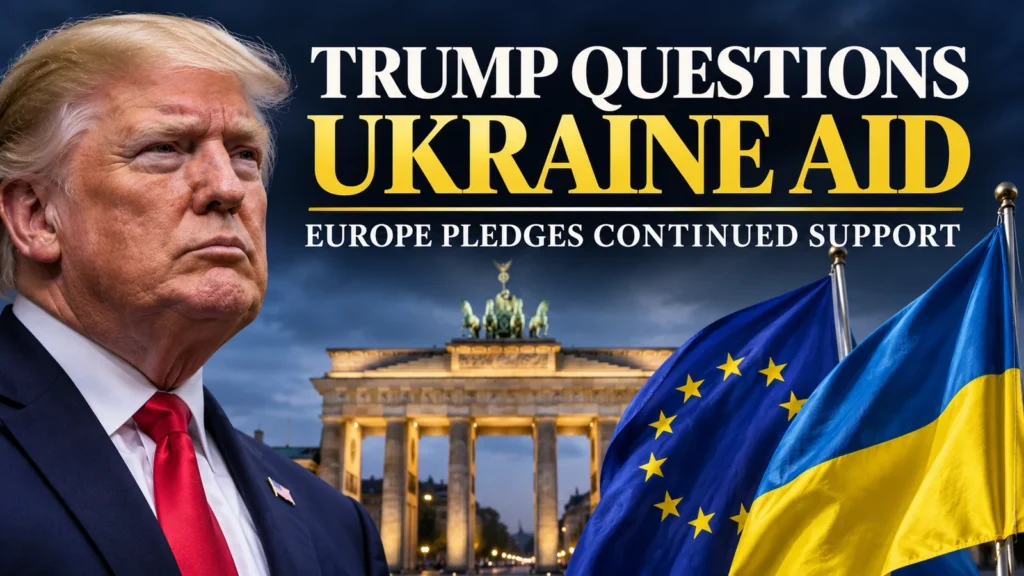
The US president joined a discussion involving European leaders meeting in Berlin on Thursday 19 November, following his talks with Putin and Chinese President Xi Jinping in Shenzhen. Accounts of the call differ on precisely how far Trump went in challenging further assistance to Kyiv.
What Trump reportedly told European leaders
According to a 19 November Euronews report citing European officials briefed on the call, Trump questioned why governments were spending billions of euros supporting Ukraine and expressed confidence that Putin was serious about peace negotiations. That reporting does not establish that European governments received an explicit instruction to halt assistance.
On 20 November, European Pravda reported a denial from an official in the French presidency, who said the suggestion that Trump had requested an end or reduction in military aid was false. The account has therefore become a dispute over what the US president said during a call that was not publicly released in full.
Europe reaffirmed military support for Ukraine
In their joint statement issued on 19 November, the leaders of Germany, France, the United Kingdom and Ukraine reaffirmed their commitment to supporting Kyiv and said the coalition would not be deterred by Russian attacks and other pressure.
The statement reaffirmed NATO allies’ pledge of €70 billion in military equipment, assistance and training for Ukraine in 2026, with at least an equivalent level in 2027. Those figures describe commitments rather than a claim that all equipment or money has already been delivered.
Speaking after the Berlin meeting, UK Prime Minister Andy Burnham said Britain would supply 1,000 British-built long-range drones and work with Norway on fast attack boats. He said Europe’s negotiating position should be united and that Russia should not be allowed to set sweeping security demands before a peace agreement.
What came out of Trump’s meeting with Putin and Xi?
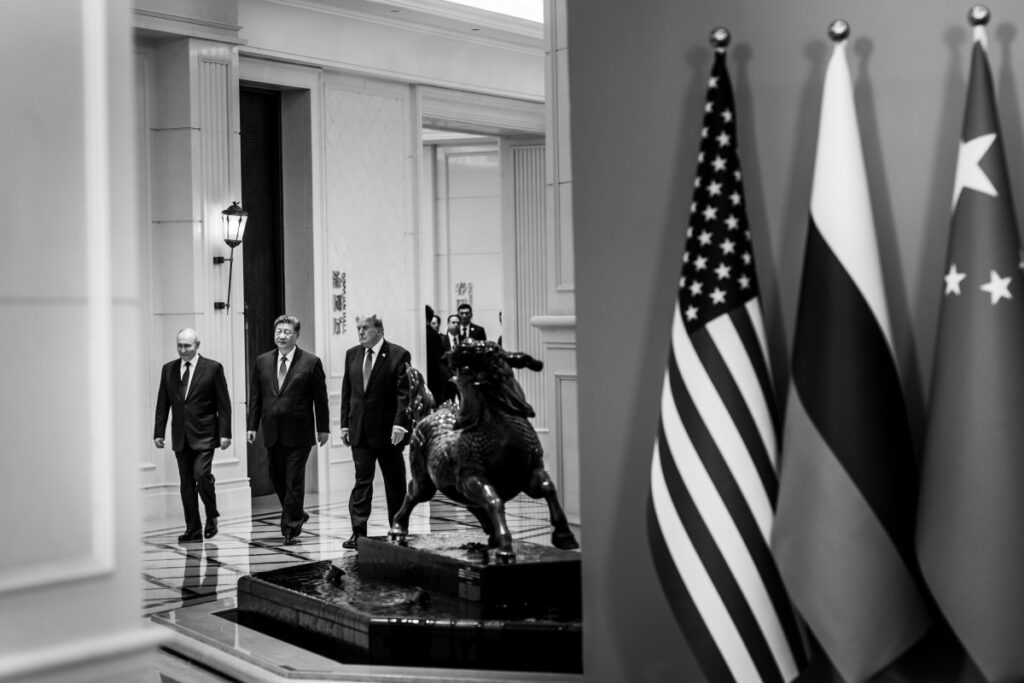
The three leaders met in Shenzhen on 19 November. Their subsequent White House declaration addressed United Nations reform, energy supplies, the International Criminal Court and nuclear risk reduction. It did not mention Ukraine or announce a settlement of the war.
At a White House news conference on 20 November, Trump said he had held good talks with Putin and believed a diplomatic solution was possible. Reuters reported that Trump declined to address potential security guarantees for Ukraine before a broader agreement was reached. Russian officials meanwhile continued to object to arrangements resembling NATO membership.
The televised reaction, and what remains unproven
During a 20 November MS NOW discussion, former US under secretary of state Richard Stengel criticised Trump’s approach, saying it was “as though” Putin had given him instructions. That was Stengel’s interpretation, not a documented instruction from the Russian president. There is no independently verified evidence that Putin ordered Trump to ask European leaders to change their assistance policies.
The video also features criticism of Trump’s claim that he expected the Ukraine war to be easier to resolve. Trump has expressed that expectation previously, attributing difficulties partly to the antagonism between Putin and Ukrainian President Volodymyr Zelenskyy. Such remarks should be distinguished from agreement on any actual ceasefire terms.
Russia’s full-scale invasion began in February 2022. Ukraine and its European partners continue to argue that any durable settlement must protect Ukrainian sovereignty and include credible security arrangements. The meaning of Trump’s Berlin call remains disputed, but the publicly issued European commitment to continued assistance is clear.