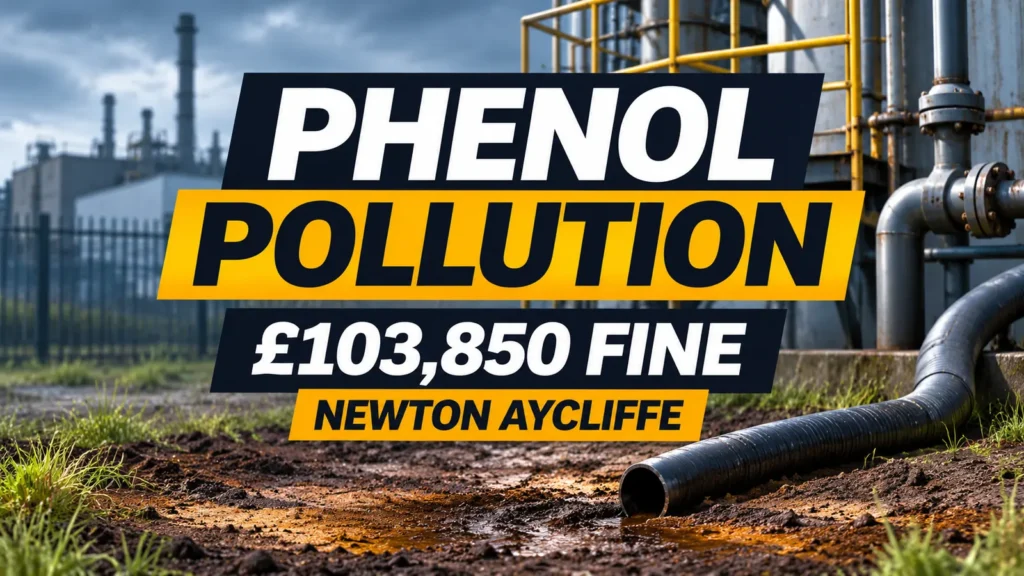
Prefere Resins UK Ltd has been fined £103,850 after waste containing toxic phenol contaminated land at its chemical plant in Newton Aycliffe, County Durham.
The company also admitted two offences involving inadequate pollution-prevention management systems. The sentence, imposed on 13 November 2026, followed an Environment Agency investigation into events at the Aycliffe Industrial Park site in July 2024.
In addition to the £103,850 fine, the company was ordered to pay £18,784.61 in costs and a victim surcharge, bringing the total to £122,634.61. The company had pleaded guilty to all three charges on 16 June 2026, the Environment Agency said.
What happened at the Prefere Resins plant?
During an unannounced inspection in July 2024, Environment Agency officers found a flexible hose connected to a phenol recovery unit. Its open end was resting on unmade ground while part of the plant was shut down for maintenance.
Around 70 square metres of land appeared brown and lifeless. Laboratory testing recorded phenol concentrations of up to 3,640mg/kg in one set of samples and 10,000mg/kg in another. The agency said historical imagery indicated the land had not previously been contaminated.
Phenol is used to make resins and other industrial products. It is toxic and corrosive, and its release can damage soil and water. Inspectors also found that the company had no documented procedure for washing the pump connected with the recovery unit.
Was groundwater or the public affected?
The Environment Agency said no impact on groundwater was identified, although the plant is within a groundwater protection zone. Its published account does not establish that nearby drinking water was contaminated or that members of the public suffered harm.
Prefere subsequently carried out work to remove the contamination from the affected land. The agency reported that the company had also revised its operating procedures, although the public statement does not provide detailed follow-up soil-test results.
What other safety problems were found?
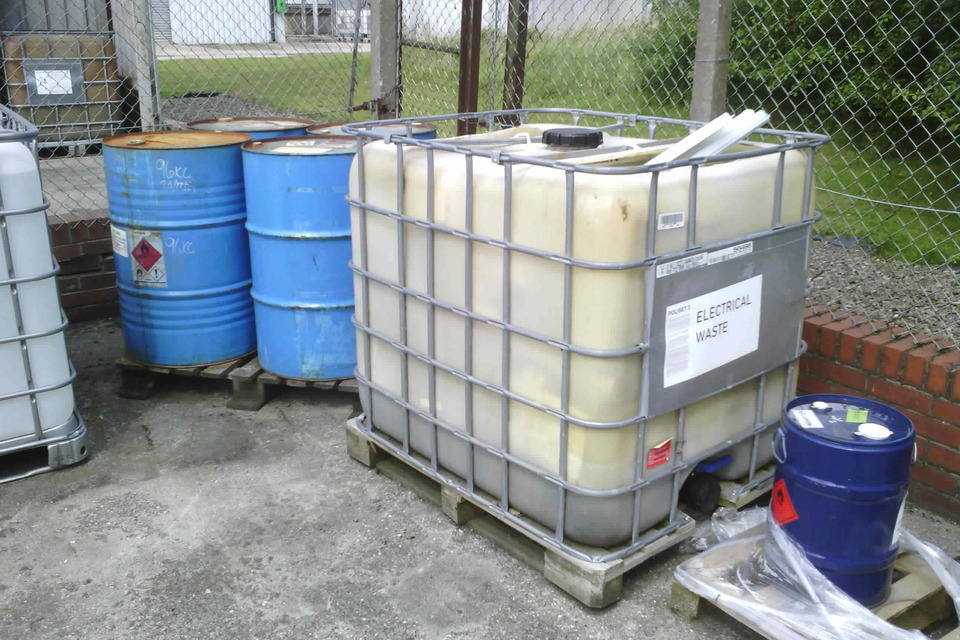
Inspectors identified shortcomings in chemical storage, including incompatible materials positioned together and containers arranged so leaks could escape the bunded containment area. One example involved waste electrical equipment stored beside drums of flammable acetone.
The Environment Agency said such conditions could create risks of fire, explosion or toxic-gas release if incompatible materials mixed. The company pleaded guilty to two permit-management offences in addition to the unlawful discharge.
Separate HSE notices issued in 2025
The Health and Safety Executive’s public register records three improvement notices served on Prefere Resins on 27 June 2025. These are separate regulatory actions, and the available records do not establish that they were caused by the July 2024 pollution incident.
One HSE notice concerned inspection and maintenance of a phenol pump and associated pipework, as well as safeguards intended to limit a major release from a phenol tank. Another notice concerned the system for recording, prioritising and allocating resources to safety improvements identified through risk assessments.
The HSE register records both of those notices as complied with. A third notice is also listed on the same date.
What happens next?
The pollution prosecution has concluded with guilty pleas and a financial penalty. The plant operates under an Environment Agency permit and is regulated alongside the HSE as an upper-tier site under the Control of Major Accident Hazards rules.
The Environment Agency’s announcement, published on 17 November 2026, does not include a response from Prefere Resins to the sentence. Fish 4 News has not independently verified a separate company statement.