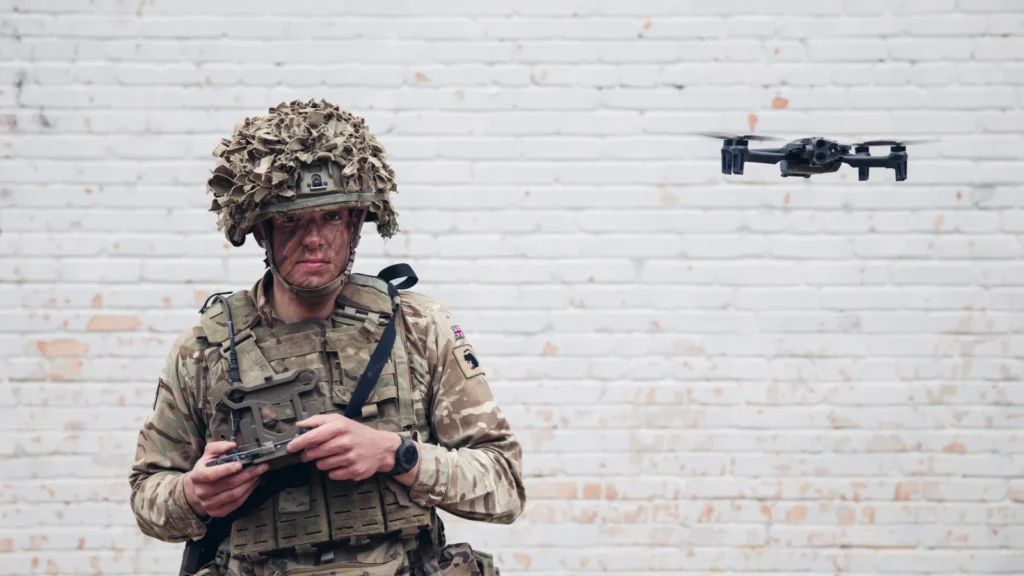
The British Army is buying hundreds more attack drones, reconnaissance equipment and electronic warfare systems in a £25 million package intended to strengthen British forces protecting NATO’s eastern flank in Estonia.

The Ministry of Defence announced the investment on Tuesday 17 November 2026, saying it would help troops detect threats, counter enemy drones and operate in smaller, more mobile formations. The equipment is intended for 4th Light Brigade, which the department says is planned to receive the new capabilities by April 2027. That date is a target, not confirmation that all equipment has already been delivered.
What drones and equipment is the Army buying?
According to the Ministry of Defence announcement, the package includes:
- Attack drones: hundreds of additional one-way attack and first-person-view drones, intended for strikes against enemy vehicles, positions and equipment.
- Reconnaissance drones: enough additional intelligence, surveillance and reconnaissance aircraft to double the number available to the troops covered by the plan.
- Counter-drone technology: electronic warfare devices carried by soldiers or fitted to vehicles, together with additional shotguns for close-range defence against drones.
- Camouflage: multi-spectral materials intended to make personnel less visible to surveillance equipment, including thermal sensors.
- Vehicles: additional lightweight 4×4 utility vehicles to allow dispersed groups to move more quickly.
The MoD says the equipment supports the Army’s developing ‘recce-strike’ approach, which links reconnaissance, intelligence and precision attacks so forces can locate and engage threats more quickly. The war in Ukraine has demonstrated the growing importance of low-cost drones, electronic warfare and the ability to adapt battlefield equipment rapidly.
Why is Britain strengthening its forces in Estonia?
Estonia borders Russia and forms part of NATO’s eastern defensive posture. British troops are stationed there as part of the alliance’s deterrence arrangements.
This investment fits into a wider UK–Estonia defence roadmap announced on 16 July 2026. Under that agreement, Britain’s deployed force is due to move from an armoured battlegroup to a more mobile anti-armour formation from April 2027. The UK said the number of personnel in Estonia would increase from about 800 to 1,200.
The shift places greater emphasis on mobile vehicles, surveillance, drones and dispersed operations. The government says those changes draw on lessons from Russia’s war against Ukraine. Whether they produce the intended operational benefits will depend on deployment, training and performance.
Is the £25 million additional defence spending?
Not necessarily. The MoD says the £25 million is part of a £50 million allocation in the Defence Investment Plan for rapidly improving Army combat capabilities under Project RAPSTONE. The statement does not establish that £25 million has been added to the defence budget on top of existing commitments.
It also does not identify the contractors supplying the new equipment, provide an exact drone count, divide the funding between equipment categories or give detailed delivery dates. The promise to double reconnaissance drone availability is not accompanied by a published starting number.
What happens next?
The next clear milestone is April 2027, when 4th Light Brigade is planned to have the new equipment. Confirmation of contracts, deliveries, training and operational readiness will be needed to establish whether the programme meets that objective.
In the meantime, the announcement describes a procurement commitment and planned capability increase, not a completed deployment or demonstrated battlefield result.
Related F4N coverage
For separate regional security developments, read our report on Estonia’s planned Russia border crossing closures following an alleged sabotage plot. The reported investigation is distinct from this British Army procurement announcement.