Cyberattacks and suspected digital interference have disrupted supermarket refrigeration systems in at least nine European countries, forcing shops to remove chilled and frozen food after temperatures rose sharply overnight.
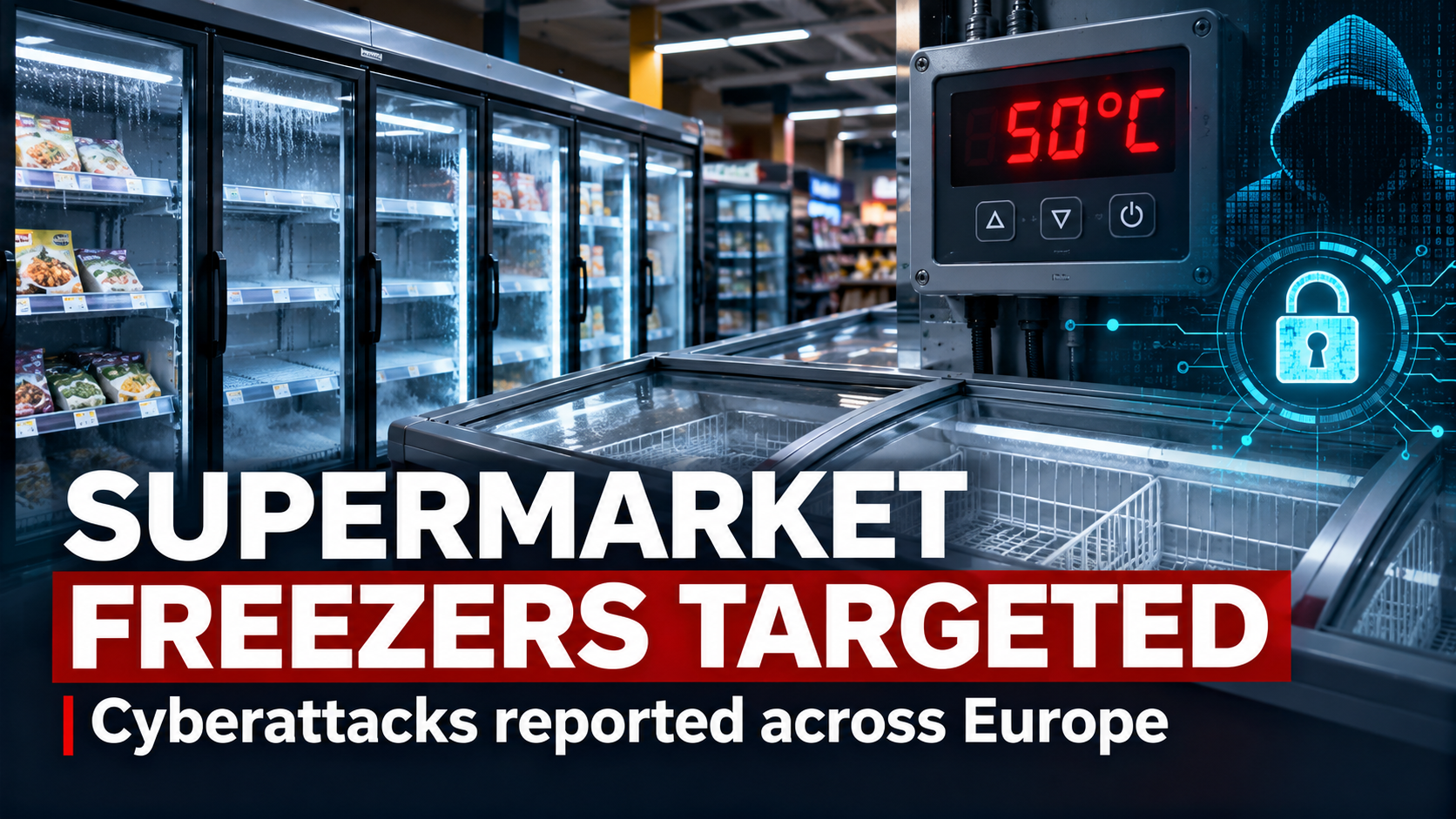
Retailers in Belgium, Estonia, Finland, Ireland, Italy, Luxembourg, the Netherlands, Portugal and Sweden reported refrigeration problems on Monday 2 November. Some confirmed unauthorised interference with their systems, while investigations into other incidents were still under way. More than 100 stores were reported to have been affected, although the full extent of the losses was not yet clear.
In Sweden, a manager at an ICA store told Reuters that freezers had reached 50°C. Other retailers described disrupted cooling, shutdowns or altered temperature settings. The reported 50°C figure does not mean every affected freezer reached that temperature.
What happened across Europe?
According to Reuters and AFP, retailers reporting problems included Carrefour, Delhaize, Spar, ICA, Coop and SuperValu. A Belgian Ikea store was also affected. In some locations staff had to discard food; in others the impact was more limited.
- Belgium: Carrefour said about 15 of its 700 stores were affected. Other reported incidents involved Delhaize, Spar, Intermarché and an Ikea outlet in Mons. Belgian federal prosecutors opened an investigation.
- Ireland: Musgrave said refrigeration systems were affected at 13 SuperValu stores, with some chilled and frozen products removed from sale.
- Sweden: Coop confirmed a cyber incident affecting a small number of shops, while ICA reported an overnight refrigeration incident at a limited number of locations.
- Portugal and Italy: AFP reported incidents at seven Intermarché stores in Portugal and several Coop-branded stores in Sicily, alongside a business in Tuscany.
- Finland and elsewhere: Kesko reported abnormal temperatures in a few smaller Finnish stores but said the cause was still under investigation. Disruption was also reported in Estonia, Luxembourg and the Netherlands.
The companies’ accounts are not identical. An interruption to refrigeration is not, by itself, proof that hackers accessed a system; some retailers have confirmed a cyber incident, while others have yet to establish the cause.
Store managers describe food being thrown away
Video published by the Guardian shows workers clearing affected shelves and freezers. Mathieu Tilman, a Delhaize supermarket manager in Belgium, said he could not understand why anyone would do this when so many people were going hungry. He described the loss of food as deeply distressing.
In footage from Sweden, ICA manager Rickard Nilsson described interference with refrigeration controls and called the apparent attack a form of terrorism. That was his personal description, not a finding by investigators.
A second wave after France
The incidents resemble a larger attack in France on 12 October. The Paris prosecutor’s office told cybersecurity publication The Record that there were around 700 victims in that earlier wave. It remains unproven whether the same individuals or group were responsible for both events.
France’s official computer emergency response team, CERT-FR, issued an alert on 12 October, updated on 16 October, warning of numerous compromised refrigeration controllers. It named certain Danfoss AK-SM and AK-SC products, alongside Copeland and Dixell XWEB systems.
These devices allow engineers and service providers to monitor and adjust temperatures remotely. If their management interfaces are exposed to the public internet or inadequately secured, attackers may be able to alter settings without entering a shop. CERT-FR advised organisations to restrict internet access, use secure connections, check settings, install available firmware updates and change default passwords.
Could UK food businesses be affected?
The Grocer reported on 13 October that research by UK Cyber Defence had identified more than 800 publicly reachable UK retail refrigeration control interfaces. Public exposure indicates a potential vulnerability; it does not mean those systems have been hacked.
On 2 November, The Grocer also reported accounts of refrigeration-control interference among meat suppliers and an alert to members of the Association of Independent Meat Suppliers. The scale and cause of those reported incidents had not been independently established, and no comparable wave of confirmed UK supermarket attacks had been identified in the reporting reviewed for this article.
Who is responsible?
No group has publicly claimed responsibility for either the October or November incidents. Authorities have not established whether the episodes are linked, what motivated them or whether a state was involved. Experts have discussed sabotage as one possible motive, but that remains an assessment rather than a verified conclusion.
EU agriculture commissioner Christophe Hansen described the incidents as a serious threat to food supply chains and consumer confidence, according to Reuters. That official concern does not establish the identity or purpose of the attackers.
What remains unknown
- The total number of affected sites and the final value of spoiled food.
- Whether the November incidents were coordinated or carried out by the same attackers as those in France.
- Which refrigeration models and security failures were involved at every store.
- Whether any further UK retail food operations have been affected.
Sources
- AFP: European refrigeration incidents, 2–3 November 2026
- Reuters: retailer reports and EU response, 2 November 2026
- CERT-FR: official refrigeration-controller warning, 12–16 October 2026
- The Record: technical context and French prosecutor figures
- The Grocer: exposed UK refrigeration controls, 13 October 2026
- The Grocer: reported UK meat supplier disruption, 2 November 2026
- Guardian News: video report, 2 November 2026