UK regulators have launched a programme to examine how artificial intelligence used in mental health support can be assessed for safety and effectiveness.
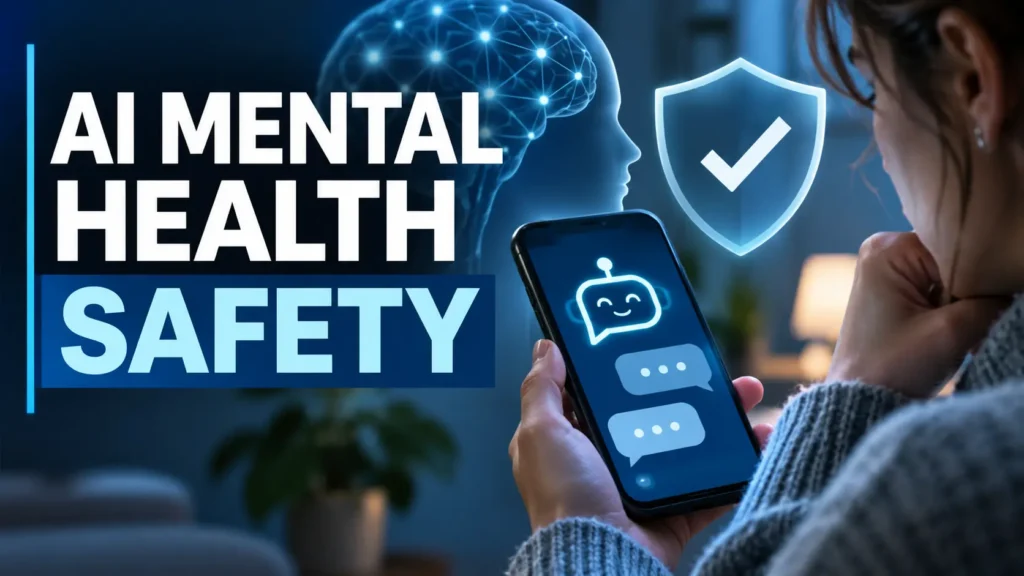
The Medicines and Healthcare products Regulatory Agency (MHRA) and the National Institute for Health and Care Excellence (NICE) announced the AI in Mental Health Airlock on 23 November 2026. The initiative comes as growing numbers of people seek support from AI tools, including chatbots not specifically designed for healthcare.
What is the AI in Mental Health Airlock?
The project is a regulatory sandbox: a controlled setting in which researchers, developers and regulators can investigate new ways of evaluating technology. It is part of a wider programme funded by Wellcome.
Rather than approving individual apps or chatbots, the project will examine whether the methods used to identify and manage risks are reliable. Clinicians and people with lived experience of mental health problems will contribute to the work.
What risks will regulators examine?
The application guidance identifies several areas that participating organisations could investigate:
- Incorrect or invented information and unsafe clinical advice.
- Failure to recognise a crisis or direct someone towards appropriate help.
- Changes in AI behaviour following updates or over time.
- Unequal performance across different groups of users.
- Emotional dependence on chatbots and safeguards for children and vulnerable people.
Why people are turning to AI for mental health support
Polling commissioned by Mental Health UK found that 37% of respondents had used an AI chatbot to help with their mental health or wellbeing. The Censuswide survey involved 2,000 people in the UK aged 16 and over in October and November 2025.
The findings suggest that AI is becoming another source of support, including for some people who face difficulties accessing conventional services. However, a survey of users’ experiences cannot establish whether a chatbot is clinically effective or safe.
The potential benefits include accessible, immediate support. The risks include users receiving convincing but inaccurate advice at a particularly vulnerable moment.
Are AI mental health chatbots regulated in the UK?
Whether a digital product falls under medical device regulation depends in part on its intended purpose. A tool developed and marketed for a medical purpose may be subject to requirements that do not apply to a general-purpose chatbot used independently for emotional support.
That distinction raises questions about how people using general-purpose AI systems will be protected. The launch does not introduce new legal requirements for those systems or establish that any particular chatbot is safe to use as a substitute for professional care.
Mind chief executive Dr Sarah Hughes has called for regulation that prioritises public safety, including for people who use general-purpose chatbots for mental health support.
What happens next?
Applications close on 22 January 2027. Up to five candidates will be selected, with testing expected to start in April 2027 and the programme scheduled to conclude in October 2028.
There is no participation fee, but organisations must cover their own costs. Findings are expected to inform future approaches to regulation and technology assessment. Participation does not constitute regulatory approval.
For people currently using AI for mental health support, the announcement does not change the need to seek qualified professional advice when appropriate. The question for regulators is how to establish dependable safeguards while allowing useful technologies to develop.