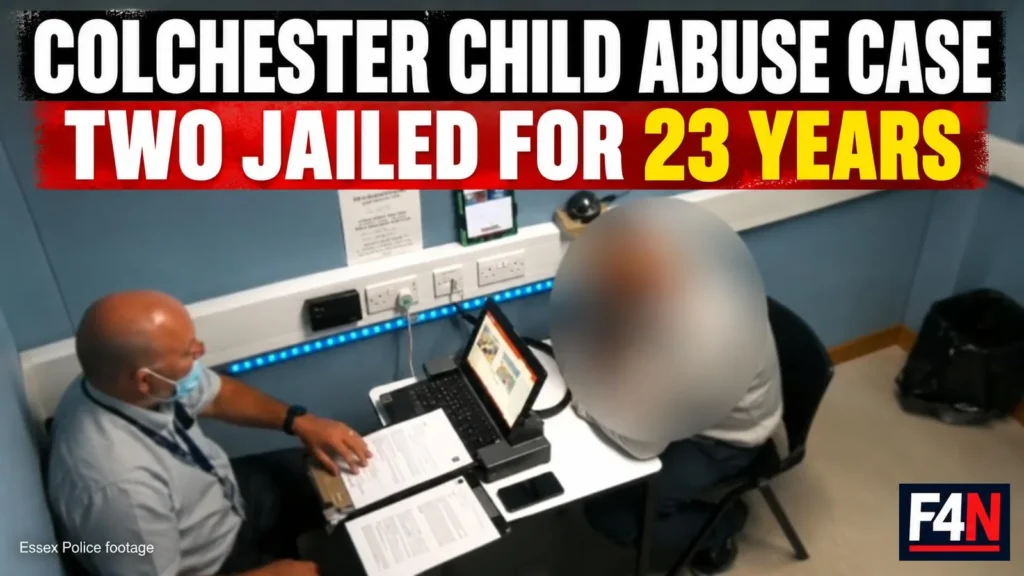
Two adults have been jailed after a boy was deliberately starved and confined to a locked room in the Colchester area. The convictions followed a six-year investigation and a five-week trial at Ipswich Crown Court.
A man and a woman have been sentenced to 12 and 11 years in prison respectively after being convicted of causing grievous bodily harm with intent to a child who was found dangerously malnourished in May 2020.
The pair, described as parents by Essex Police, were sentenced at Ipswich Crown Court on Friday 23 October 2026. The force announced the outcome on Monday 26 October, describing it as an unusual prosecution that recognised the severity of the child’s suffering.
Boy Found Critically Malnourished in Colchester
Police and social services found the boy in the Colchester area in May 2020 and arranged urgent hospital treatment. According to Essex Police, he was severely underweight, unsteady on his feet and frequently shaking, with substantial muscle wastage.
Doctors warned that a delay in obtaining medical help could have been fatal. Investigators subsequently established that he had been starved and severely neglected between January and May 2020.
The boy had been isolated in a small room, without adequate food, warmth or a comfortable place to sleep. Police said the floor was covered with green tarpaulin rather than carpet and the door was locked from the outside. Photographs and video recordings recovered during the investigation documented the conditions in which he had been kept.
12-Year and 11-Year Prison Sentences
Both defendants denied the charges but were found guilty after a five-week trial at Ipswich Crown Court. The man received a 12-year prison sentence and the woman received 11 years, a combined total of 23 years.
Sentencing them, Judge Richard Kelly said the child had been “deliberately starved” and “kept prisoner”. He described the room as “little more than a cupboard with a window” and said neither defendant had shown “not a jot of remorse”.
Why the GBH With Intent Convictions Matter
Rather than proceeding solely with neglect-related charges, Essex Police and the Crown Prosecution Service pursued grievous bodily harm with intent. The force says that approach better reflected both the seriousness of the injuries and the deliberate nature of the abuse.
GBH with intent is an offence under section 18 of the Offences against the Person Act 1861, for which the maximum sentence is life imprisonment. The prosecution must establish the required intention to cause serious harm. That is a significant distinction from offences in which the prosecution need not prove such intent.
Essex Police called this a landmark case because of the comparatively unusual use of the offence for sustained child abuse. The force has not established that it is the first prosecution of its kind, and Fish 4 News is not treating it as a new legal precedent.
Six Years From Discovery to Sentencing
- January to May 2020: Police say the boy was subjected to sustained starvation and neglect.
- May 2020: Police and social workers found him and secured urgent hospital care.
- 2026: The defendants were convicted after a five-week trial at Ipswich Crown Court.
- 23 October 2026: The man and woman were sentenced to 12 and 11 years in prison.
- 26 October 2026: Essex Police publicly reported the sentences and released interview footage.
Detective Inspector Luke Baldwin said the investigation had been exceptionally distressing and paid tribute to officers, social workers and medical professionals who helped secure the child’s safety. Police have referred to unavoidable delays between the original investigation and the conclusion of the case, but have not publicly provided a full explanation of those delays.
Child Recovering After Years of Support
The boy spent an extended period in hospital and has received several years of psychological care. Essex Police say he continues to recover physically and is now in a safe and loving environment.
Neither convicted adult can be named. A court order restricts publication of their identities to protect the child from being identified. The restriction is intended to safeguard him, not to shield those convicted.
Watch: Essex Police Interview Footage
The following footage, released by Essex Police, shows part of the police interview carried out during the investigation. An interviewer is seen referring to documents and medical evidence. It does not show the trial or the child.
Sources: Essex Police official statement (26 October 2026); Crown Prosecution Service guidance on violent offences; Offences against the Person Act 1861, section 18; Essex Police interview video.