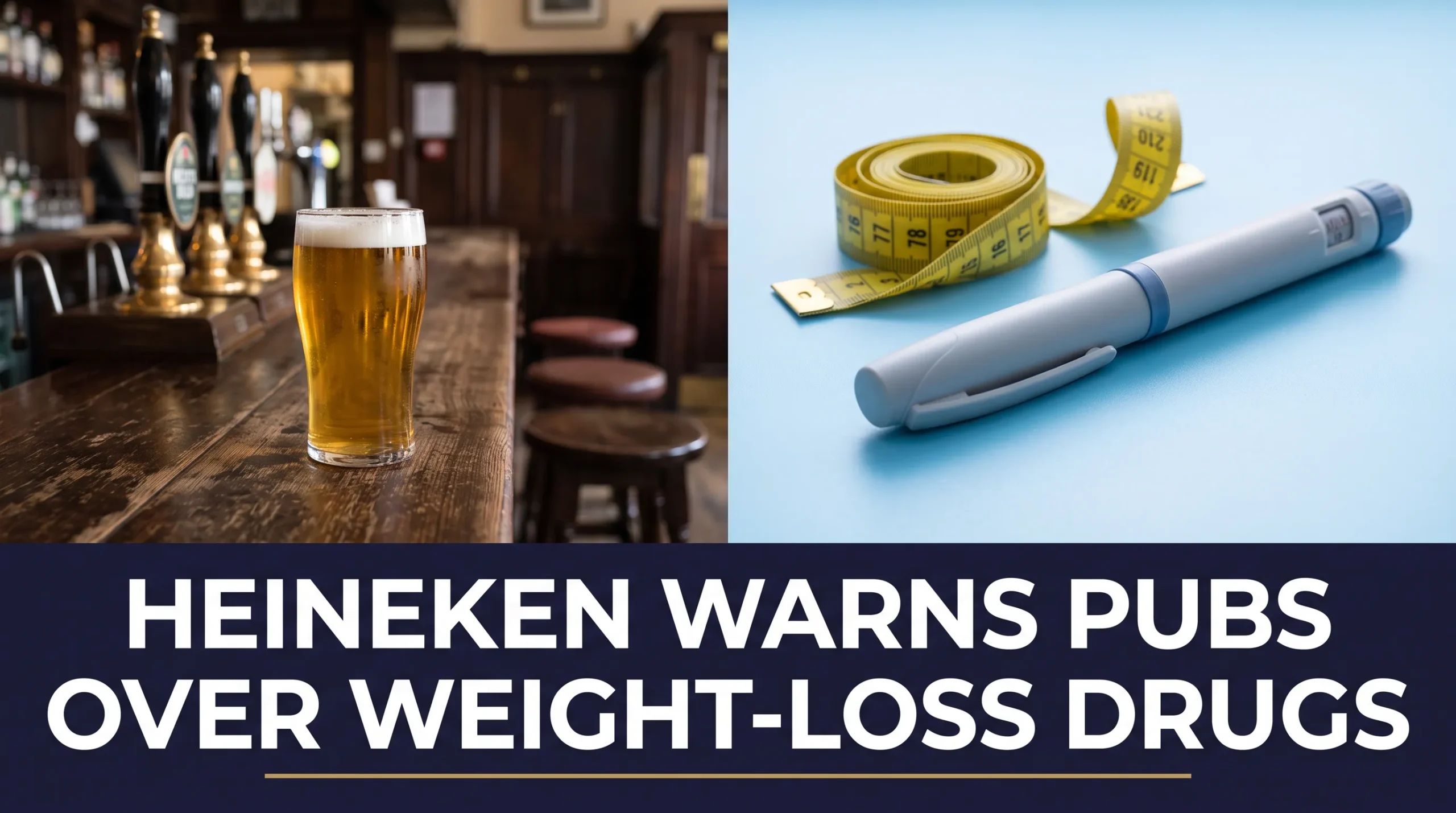
Heineken has warned British pubs and bars that increasing use of weight-loss medication could change how much alcohol customers drink, prompting calls for smaller serves and more alcohol-free choices.
What Heineken has told pubs
In a presentation sent to hospitality customers in October, the brewer warned that medicines known as GLP-1 drugs could put pressure on beer and cider sales. Reuters first reported the document on 23 October.
The concern is not that people taking the medication will necessarily stop visiting pubs. Rather, they may feel full sooner, want fewer alcoholic drinks or choose a different kind of drink.
According to Reuters, Heineken encouraged venues to respond by:
- Making half-pints and smaller servings more prominent
- Offering appealing low-alcohol and alcohol-free drinks
- Pairing drinks with small plates rather than relying on longer, multi-pint sessions
Heineken confirmed to Reuters that the presentation formed part of its regular discussions with UK hospitality businesses. It said it had noticed changes among GLP-1 users and planned to monitor those habits into 2027.
What does the research show?
GLP-1 medicines, including semaglutide, are used to treat conditions such as obesity and type 2 diabetes. They affect appetite and feelings of fullness. Researchers are also investigating whether they influence alcohol cravings.
A March 2026 Drinkaware and KAM survey reported that people who had used GLP-1 medication drank on fewer days after starting treatment. Average drinking frequency fell from 3.1 to 2.2 days a week, a 29% reduction, while self-reported weekly alcohol consumption fell by 16%.
The survey included additional questions from 207 current or former users. Its findings are based on people’s accounts of their habits, so they do not independently establish that the medication caused every reported change.
There is also clinical evidence. A randomised trial published in The Lancet in May 2026 involved 108 people with obesity and moderate-to-severe alcohol use disorder. Over 26 weeks, participants receiving weekly semaglutide alongside cognitive behavioural therapy had a larger reduction in heavy drinking days than those receiving a placebo and the same therapy.
That result is promising, but it does not mean the medication is an established treatment for alcohol dependence, nor does it tell us exactly how British pub trade will be affected.
Why this matters to British pubs
Heineken has a substantial stake in the UK hospitality market. Its own website lists around 2,350 pubs in its Star Pubs estate, many operated by independent licensees.
According to Heineken UK’s 2026 Beer Report, beer sales across British pubs, bars and restaurants totalled nearly £14 billion in the year to February 2026. That figure covers the wider UK hospitality market, not Heineken’s own sales. It would be premature to attribute broader changes in drinking habits solely to weight-loss drugs. Price pressures, health concerns and changing consumer tastes also influence what people order.
For publicans, the commercial question is whether fewer pints per customer lead to lower overall spending, or whether food, smaller serves and alcohol-free options can help sustain visits.
What remains uncertain
There is no reliable evidence that GLP-1 medicines have already caused a nationwide collapse in British beer sales. Some drinks companies consider the possible effect manageable, and others say the available evidence is not yet conclusive.
Heineken’s presentation is therefore best understood as a warning about a potential shift in customer behaviour, not proof that the traditional pub is disappearing.
Sources
- Reuters: Heineken document and company response, 23 October 2026
- Drinkaware and KAM: Drinking Differently, March 2026
- The Lancet: semaglutide randomised trial, May 2026
- Heineken UK: Our Pubs