Shell has reported adjusted earnings of $10.81 billion (£8.1 billion) for the third quarter of 2026, almost twice its result a year earlier, as war-related disruption drives up global energy prices.
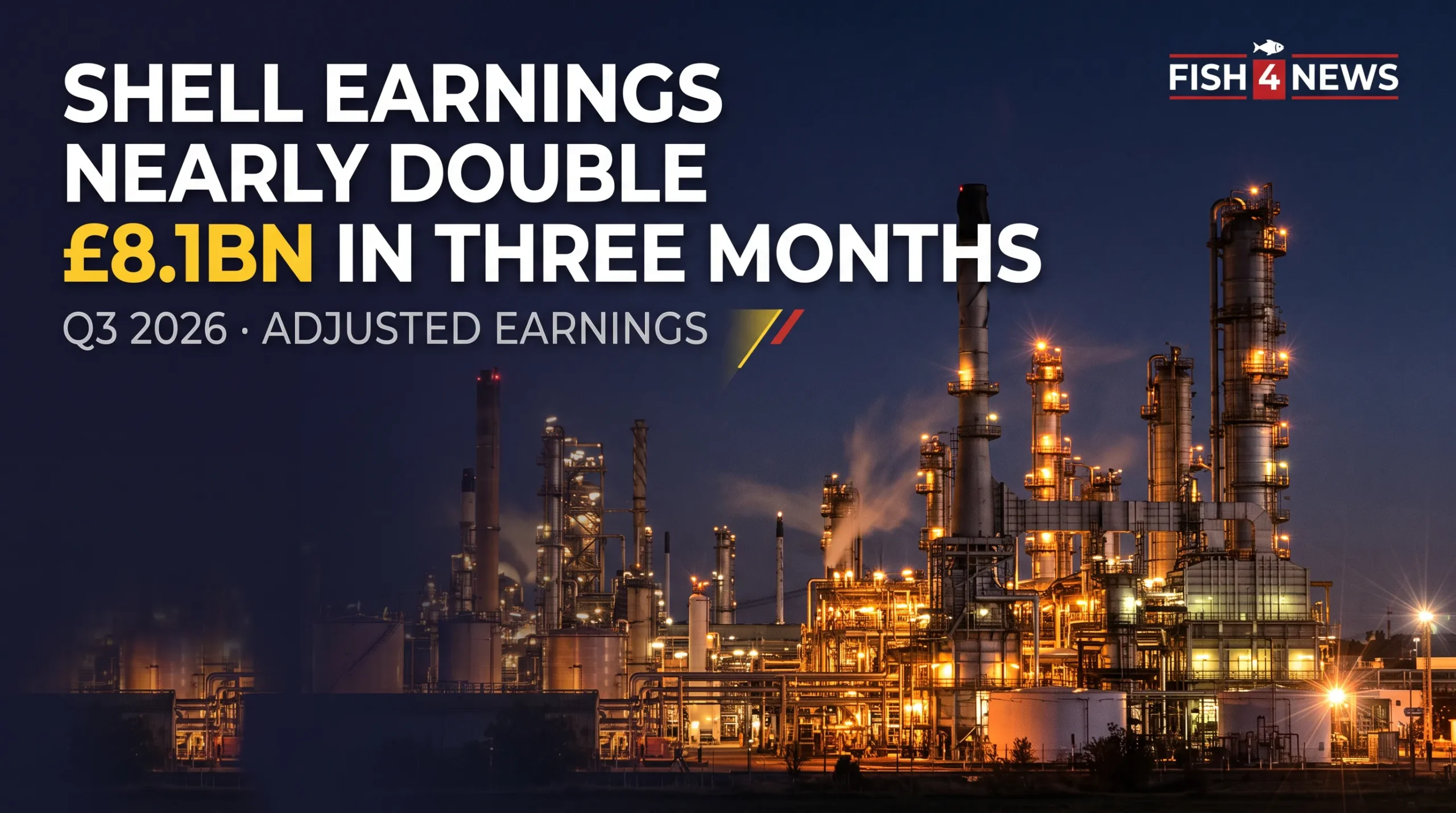
The oil and gas group published its results on Thursday 29 October, reporting adjusted earnings of $10.814bn for July to September, against $5.432bn in the same period in 2025. That is a rise of about 99%. It is not a doubling compared with the immediately preceding quarter, when adjusted earnings were $9.836bn.
The results exceeded analysts’ expectations and were Shell’s strongest quarterly performance since 2022, according to Reuters.
What Shell’s results show
- Adjusted earnings: $10.81bn (£8.1bn), compared with $5.43bn a year earlier.
- Reported income attributable to shareholders: $12.06bn, compared with $5.32bn in Q3 2025. This is a different accounting measure from adjusted earnings.
- Refining margin: a record $42 per barrel, compared with $11.60 a year earlier, according to Reuters.
- Share buybacks: Shell announced plans to repurchase another $5bn of its shares over the next three months, up from $3bn in the previous quarter.
Adjusted earnings are a measure Shell uses to assess underlying performance after excluding specified items and accounting adjustments. They should not be confused with statutory profit, and the figures represent Shell’s international operations rather than its UK business alone.
How the Iran war affected energy earnings
The US-Israeli war involving Iran has disrupted oil and gas supplies, damaged energy infrastructure and raised the prices and margins available to some producers and refiners. Shell’s refining margin rose sharply as supplies of refined fuels, including diesel, came under pressure.
Those conditions have also increased costs for motorists and contributed to pressure on energy markets. However, the conflict has not benefited every part of Shell’s operations: outages in the Middle East have reduced some of its gas production.
Shell credited strong operating performance alongside elevated commodity prices. Chief executive Wael Sawan said the business had delivered strong results amid severe disruption to the global energy system, while emphasising its role in supplying energy to customers.
Greenpeace condemns rising profits
Greenpeace UK responded to the results by criticising the contrast between the company’s earnings and the costs faced by households and communities affected by rising energy prices and climate change.
In a social media post, Greenpeace said people were paying with their “lives and paycheques” as energy companies benefited. The language is the environmental group’s campaigning assessment, not a conclusion established by Shell’s financial accounts.
In comments reported by ITV News via STV, Greenpeace senior campaigner Philip Evans called for higher taxes on fossil-fuel companies and criticised the prospect of further oil and gas development.
What about the UK’s windfall tax?
The UK already has an Energy Profits Levy on qualifying profits from oil and gas production in the UK and on the UK Continental Shelf. The levy does not automatically apply to all of Shell’s worldwide adjusted earnings, which include refining, trading, gas and other businesses.
The government has proposed replacing the existing levy with a new Oil and Gas Revenue Levy from April 2030, or earlier if the mechanism for ending the current levy is triggered. The proposed replacement would apply when qualifying oil and gas sale prices exceed specified thresholds.
Whether energy companies should pay more tax on exceptional profits remains a political question. The latest results provide evidence of substantially higher earnings, but do not by themselves establish what additional tax Shell would owe in Britain.