The RAF has used its Protector RG1 drone to monitor Russian naval activity in the English Channel during its first operational missions in UK airspace, providing more than 10 hours of surveillance support to Royal Navy vessels and helicopters.
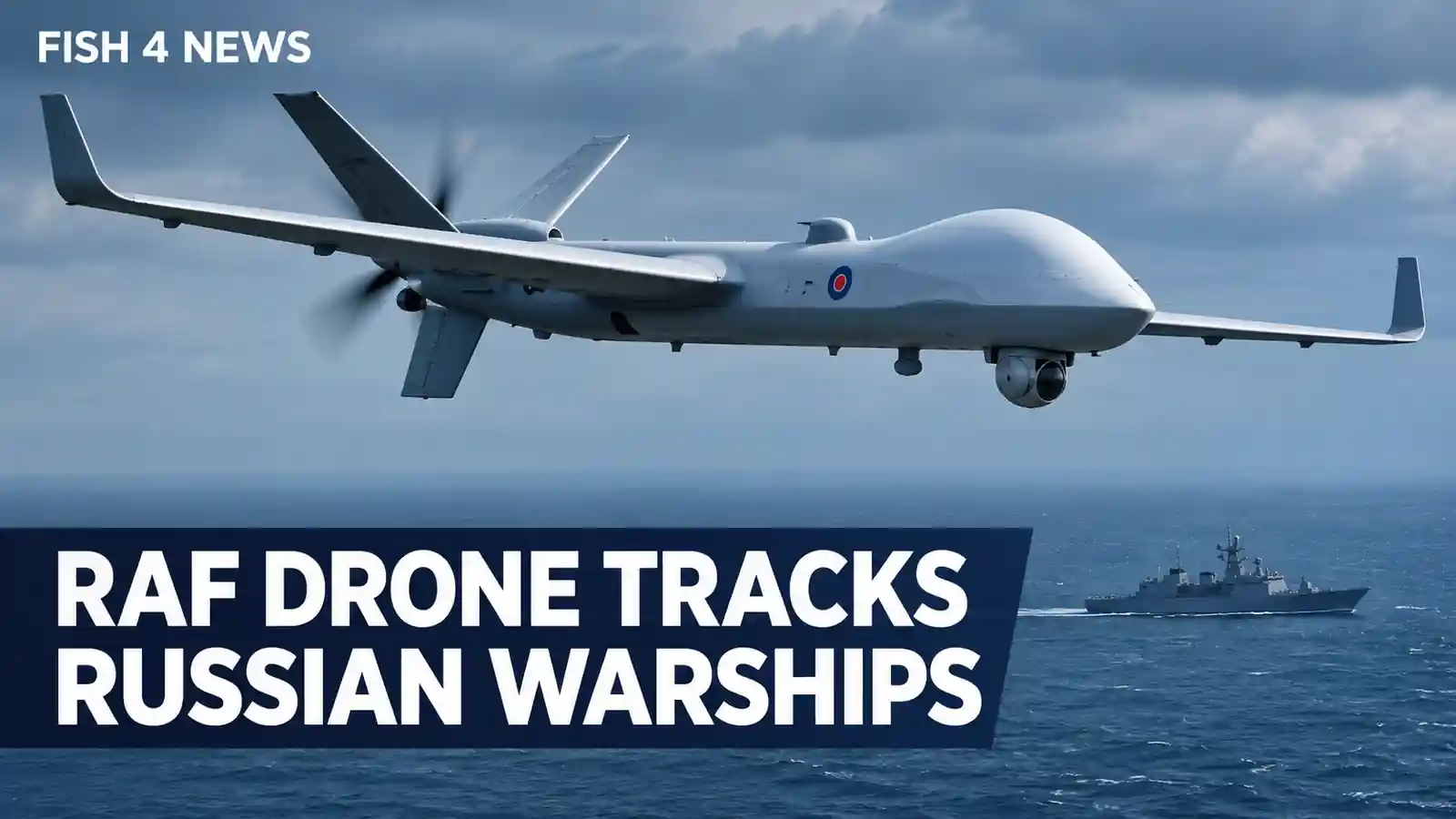
The remotely piloted aircraft flew unarmed during operations between late September and mid-October 2026. Its deployment was disclosed as the Royal Navy detailed three separate monitoring operations involving Russian warships, a naval intelligence vessel and sanctioned shipping around Britain.
Russian frigate escorted sanctioned shipping through the Channel
Between 1 and 14 October, the Type 45 destroyer HMS Dauntless and offshore patrol vessel HMS Tyne monitored the Russian frigate Neustrashimy while it escorted cargo vessels subject to UK sanctions through the English Channel. The Royal Navy said the operation formed part of its continuing effort to track Russian military and sanctions-linked maritime activity.
The Protector added an airborne intelligence, surveillance and reconnaissance capability to the work of ships and helicopters. The Ministry of Defence has not disclosed individual flight routes, precise surveillance timings or the imagery and intelligence gathered.
Russian intelligence vessel tracked near Scottish NATO exercise
From 29 September to 8 October, Royal Navy Merlin helicopters were deployed from RNAS Culdrose to Glasgow Prestwick as part of Operation Iceblast. They monitored the Russian intelligence-gathering vessel Viktor Leonov near the Outer Hebrides.
The Royal Navy said the vessel was observing NATO warships participating in Exercise Strike Warrior, which involved more than 2,000 personnel from six countries. The Merlin deployment allowed crews to monitor the ship away from the helicopters’ normal Cornwall base.
HMS Tyne monitors Russian landing ship
HMS Tyne was also tasked to monitor the Russian landing ship Aleksandr Shabalin between 11 and 14 October as it travelled through the English Channel towards the Baltic. The ship was escorting the cargo vessel Energy-2 and was accompanied by the tug Proton. A Wildcat helicopter from 815 Naval Air Squadron supported the patrol.
Why the Protector mission matters
The Protector RG Mk1 is the RAF’s version of the MQ-9B SkyGuardian remotely piloted aircraft. Based at RAF Waddington, it is designed for long-duration reconnaissance and can remain airborne for more than 40 hours, according to the RAF. Its published equipment includes optical and infrared sensors and synthetic aperture radar.
Unlike the earlier Reaper system, Protector is designed for routine integration with controlled civilian airspace. That gives defence planners more flexibility to send an uncrewed surveillance aircraft on missions around the UK while other military and commercial aircraft are operating.
This was not Protector’s first flight over Britain: it first flew in UK airspace in 2023. The RAF also reports that the type began operational flying in 2025 and completed a transit through European civilian airspace in June 2026. The new milestone concerns its first operational sorties in UK airspace.
Is Russian naval activity increasing?
The Royal Navy reported in August that its activations to monitor Russian activity had increased by 25% during the first eight months of 2026 compared with the same period in 2025. That figure describes British monitoring activations; it should not be read as a measured 25% rise in the number of Russian ships or hostile incidents.
The latest operations illustrate the routine but increasingly prominent work of tracking foreign military vessels and sanctioned shipping near UK waters. Surveillance of a ship passing through the Channel does not, by itself, establish that the vessel has violated British territorial waters or international maritime law.
Sources
- Royal Navy: Russian intelligence vessel and warships monitored across three operations, 2 November 2026
- Royal Air Force: Protector RG Mk1 aircraft and capabilities
- Royal Navy: August update on Russian naval monitoring activations
- Royal Air Force: Protector’s first transit through European civilian airspace, June 2026
- Royal Air Force: Protector completes 1,000 flying hours, October 2026