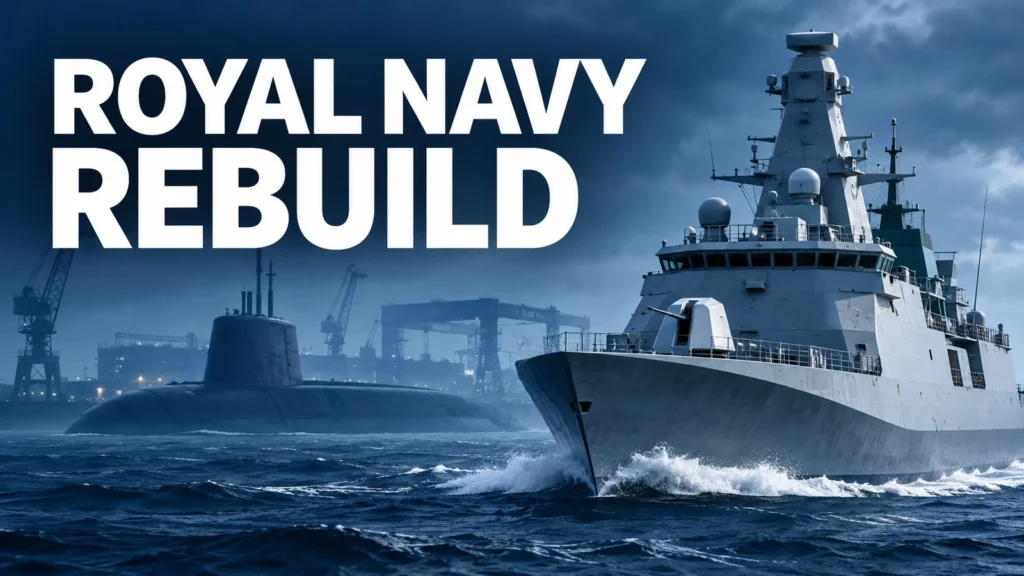
The Royal Navy says it is undertaking its most extensive rebuilding programme since the Second World War, with new frigates, nuclear submarines and a future fleet of crewed and uncrewed vessels.
First Sea Lord General Sir Gwyn Jenkins outlined the programme at the International Sea Power Conference in Norway on 10 November 2026. He described it as the Navy’s largest recapitalisation since 1945 and said the service was being reorganised to meet potential threats by the end of the decade. The scale of the programme is the Navy’s assessment, not a verified comparison of the number of operational warships across different periods. His full speech is published by the Ministry of Defence.
What ships and submarines are being built?
The First Sea Lord set out a combination of construction already under way and longer-term plans:
- 13 frigates: eight Type 26 anti-submarine frigates being built for the UK on the Clyde and five Type 31 general-purpose frigates being constructed at Rosyth.
- Four Dreadnought-class submarines: intended to replace the Vanguard-class boats carrying the UK’s nuclear deterrent.
- Attack submarines: completion of the Astute programme, followed in the longer term by up to 12 next-generation submarines under the AUKUS partnership.
- Six Common Combat Vessels: future platforms designed to direct uncrewed maritime systems.
- Four new amphibious ships: part of plans to give Royal Marines greater operational reach, alongside new fleet support ships.
Jenkins said construction across existing programmes represented approximately 280,000 tonnes of new steel, rising to around 450,000 tonnes if planned programmes are included. Those figures describe the stated scope of shipbuilding, not the tonnage of vessels already delivered or available for operations.
Why is the Royal Navy rebuilding?
The renewal follows years of concern about the number and availability of front-line vessels. Official equipment statistics show that four frigates and two landing vessels left the fleet between April 2025 and April 2026. The Navy counted 52 surface vessels in April 2026, but this total includes different kinds of ships and cannot be read as 52 available combat warships.
In an October 2026 report, Parliament’s Defence Committee warned that the Navy had only five towed-array-equipped anti-submarine frigates against a requirement for eight. It also raised concerns about the availability of destroyers and attack submarines, and asked the government for a plan to improve readiness before 2030. The committee’s Defence in the High North report identifies a present capability gap, whatever the size of the future building programme.
When will the new warships enter service?
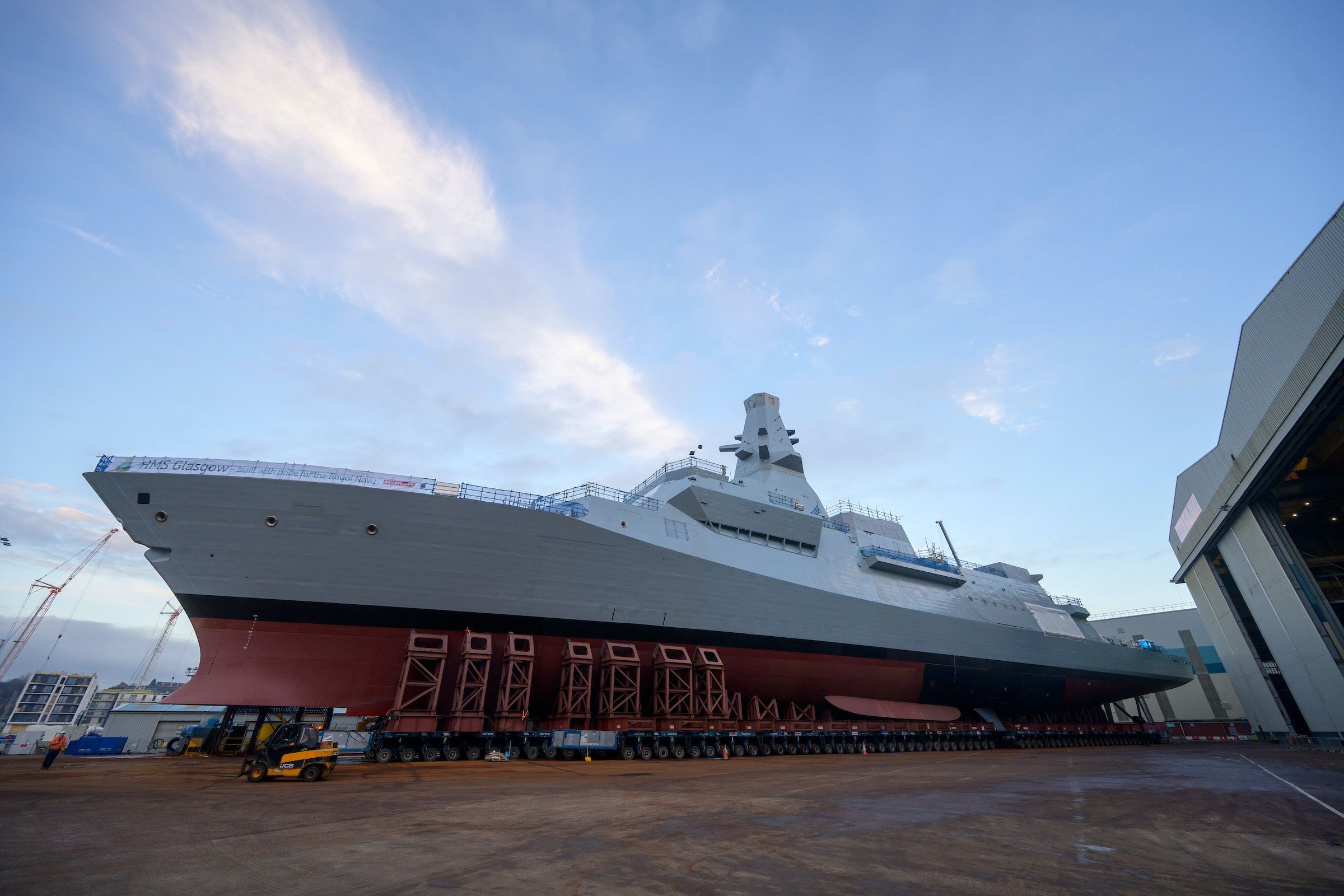
The first Type 26 frigate, HMS Glasgow, is expected to become operational in 2028. The government says the five Type 31 frigates should be in service by the early 2030s, although individual delivery schedules remain under review. The Dreadnought and AUKUS programmes extend over much longer periods. Ministers have confirmed the Type 26 and Type 31 timetable in Parliament.
The government has also said it expects 19 frigates and destroyers in the 2030s, made up of eight Type 26s, five Type 31s and six Type 45 destroyers. That is a future planning figure, not the number of front-line escorts ready to deploy today. The replacement programme therefore does not, by itself, resolve the Navy’s immediate shortfalls.
Why do official statements differ on support ships?
Jenkins referred in his Oslo speech to four Fleet Solid Support ships. However, the Ministry of Defence’s September 2026 announcement and its November Belfast shipbuilding update both describe a programme for three. The public record does not confirm an additional fourth order. Until that is clarified, the fourth ship should not be treated as contracted.
The move towards a hybrid Navy
The plans go beyond traditional shipbuilding. Jenkins described the Navy’s new autonomous squadron in Portsmouth, uncrewed surface vessels and forthcoming trials of a carrier-capable uncrewed aircraft demonstrator. These projects are intended to let crewed ships work with drones and sensor networks, but several remain at the trial or development stage.
On the same day as his speech, the government announced a framework for £90 million of new undersea sensors and autonomous systems as part of Atlantic Bastion, designed to improve monitoring of threats in the North Atlantic. Fish 4 News has reported separately on the Atlantic Net programme and what has actually been funded.
The Navy says shipbuilding and new technologies will support jobs and industrial capacity across locations including the Clyde, Rosyth, Barrow, Belfast and the Solent. How quickly the new fleet becomes operational will depend on delivery schedules, personnel, maintenance, weapons and the ability to keep ships at sea.
What remains uncertain?
The announced programme is substantial, but the phrase “biggest rebuild since the Second World War” comes from the First Sea Lord. It does not mean that all the vessels mentioned are already funded, under construction or due to join the fleet by 2030. Nor does it demonstrate that the finished Royal Navy will be larger in the number of crewed combat ships. The key near-term test is whether availability improves before replacements arrive.
Sources
- Ministry of Defence: First Sea Lord’s Oslo speech, 10 November 2026
- House of Commons Defence Committee: Defence in the High North, October 2026
- Ministry of Defence: UK armed forces equipment statistics, August 2026
- Ministry of Defence: Fleet Solid Support ship programme, September 2026
- Ministry of Defence: Atlantic Net investment, 10 November 2026
- UK Defence Journal: Royal Navy in biggest rebuild since Second World War, 10 November 2026
Follow this story: Royal Navy rebuild coverage.