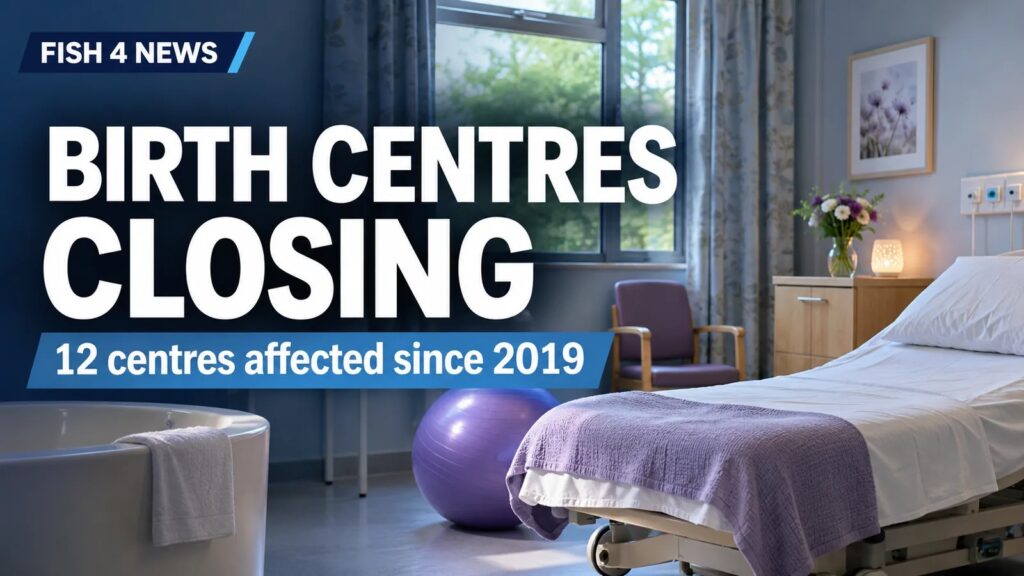
Twelve midwife-led NHS birth centres in England have stopped providing deliveries since 2019, according to new reporting, with six subsequently made permanently unavailable for births since July 2024. The closures are raising questions about how much choice families have over where to give birth.
An investigation published by The Guardian on 7 November identified six permanent closures, four prolonged suspensions still described as temporary and two centres unable to operate because of problems with the hospital buildings housing them. The figures concern midwife-led birthing facilities, not the closure of 12 entire hospitals or all maternity services at those sites.
NHS organisations point to safe staffing, low use of some units and the need to manage more complex pregnancies. Maternity and childbirth organisations warn that removing local birth facilities can leave women travelling further and reduce the availability of care in their preferred setting.
Where have birth services closed permanently?
The six sites identified in the investigation are Rossendale in Lancashire; Edgware in north London; St Mary’s in Melton Mowbray, Leicestershire; County Hospital in Stafford; Samuel Johnson Community Hospital in Lichfield; and Friarwood Birth Centre at Pontefract Hospital, West Yorkshire.
The details behind those decisions differ. At Rossendale Birth Centre, East Lancashire Hospitals NHS Trust said in July 2026 that only four babies had been born at the unit in the previous two years, compared with an original expectation of around 125 births annually when it opened in 2010. Antenatal and postnatal care continues at the Rawtenstall site.
At Stafford and Lichfield, births had already been suspended in March 2020 during the Covid-19 pandemic. Following public consultation, NHS commissioners approved permanent withdrawal of birthing services in September 2026. Both hospitals continue to offer antenatal and postnatal care.
At Pontefract, births were suspended in November 2019. A decision confirmed in September 2025 not to restart the midwife-led birthing facility retained local pregnancy and postnatal support. In Melton Mowbray, commissioners approved the relocation of birth services to Leicester General Hospital in March 2026, following a pause in deliveries from July 2025; local clinics and home visits were to continue.
North Central London NHS commissioners also approved the closure of birthing suites at Edgware Birth Centre in March 2025 while planning expanded antenatal and postnatal care on the site.
The dates of these permanent decisions should not be confused with the dates when deliveries originally stopped. Several birth facilities were unavailable for years before a permanent decision was made. Nor does approval of a closure establish that services ceased for the first time under the government in office when the decision was taken.
Some ‘temporary’ closures have lasted years
The investigation also identifies Huddersfield, where the birth centre stopped deliveries in November 2020, and Ingleside in Salford, which has been closed to births since January 2022. Neither long-running interruption should be counted as a confirmed permanent closure without an NHS decision to that effect.
Midwife-led deliveries at Crowborough in East Sussex were suspended in October 2025 amid staffing difficulties. The NHS trust said it had reviewed what would be needed to reopen, but no confirmed restart date was given in the reporting. Campaigners, including local MP Nusrat Ghani, are pressing for services to return.
There is also evidence that reopening is possible. Gloucestershire Hospitals NHS Foundation Trust announced on 3 November that home births are scheduled to restart on 4 January 2027 and Cheltenham Birth Centre, closed since 2022, is scheduled to reopen on 1 February 2027. The trust says each phase depends on safe staffing and preparations being in place.
Why does a local birth centre matter?
The National Institute for Health and Care Excellence (NICE) recommends that services make four birth settings available locally or in neighbouring areas: home, a standalone midwife-led unit, a midwife-led unit alongside a hospital obstetric unit and an obstetric unit. Guidance says women with low-risk pregnancies should be supported to make an informed choice, while ensuring timely transfer to specialist care if necessary.
A standalone centre is not appropriate for every pregnancy. Some women and babies need specialist obstetric or neonatal services, and hospitals must consider whether they can operate a centre safely at all hours. But having fewer available settings can also mean longer journeys, extra transport costs and less flexibility for families, particularly where public transport is limited.
The problem overlaps with Chief Medical Officer Sir Chris Whitty’s recent warning about healthcare access in England’s rural communities and small towns. His report highlights the barriers caused by distance and public transport, although it does not assess these particular birth-centre closures.
NHS staffing and the government’s response
The Royal College of Midwives and other campaign groups say restrictions on NHS-supported midwife-led births and home births can undermine informed choice. NHS providers say staffing and clinical safety cannot be compromised, especially where small facilities have low birth numbers or struggle to maintain round-the-clock cover.
According to The Guardian’s reporting, the Department of Health and Social Care said the government was committed to improving maternity safety and pointed to more than 600 additional NHS midwives over the past year. That national figure does not, by itself, show whether staffing is sufficient at every local birth centre.
Health Secretary Yvette Cooper told MPs on 4 November that an interim maternity action plan is expected before Christmas, with a new national framework of maternity and neonatal care standards planned for the middle of 2027. Those proposals will be important in establishing how ministers intend to reconcile safety, staffing and birth choice.
What remains unclear
The published figures are a snapshot of services unavailable for births, not a single official count of 12 permanently closed NHS maternity units. The future of some temporarily suspended facilities remains unresolved, and the impact on journeys varies substantially between communities.
For expectant parents, local maternity teams remain the appropriate source for current birth-setting availability and clinical advice. Planned reopenings and service changes may be subject to staffing and safety checks.
Sources
- The Guardian, 7 November 2026: investigation into midwife-led unit closures
- NHS Staffordshire and Stoke-on-Trent ICB: Stafford and Lichfield maternity decision
- Wakefield District Health and Care Partnership: Pontefract birth choices decision
- East Lancashire Hospitals NHS Trust: Rossendale Birth Centre update
- Leicester, Leicestershire and Rutland ICB: St Mary’s birth services decision
- Royal Free London: Start Well maternity decisions
- Gloucestershire Hospitals NHS Foundation Trust: Cheltenham reopening dates
- NICE: guidance on intrapartum care and place of birth